Golf Ball Position Guide: Correct Placement for Every Club

Ball position is one of the simplest setup fixes that makes an immediate difference in your ball flight. If your shots are consistently thin, fat, slicing, or ballooning, the ball may be sitting in the wrong spot in your stance not your swing.
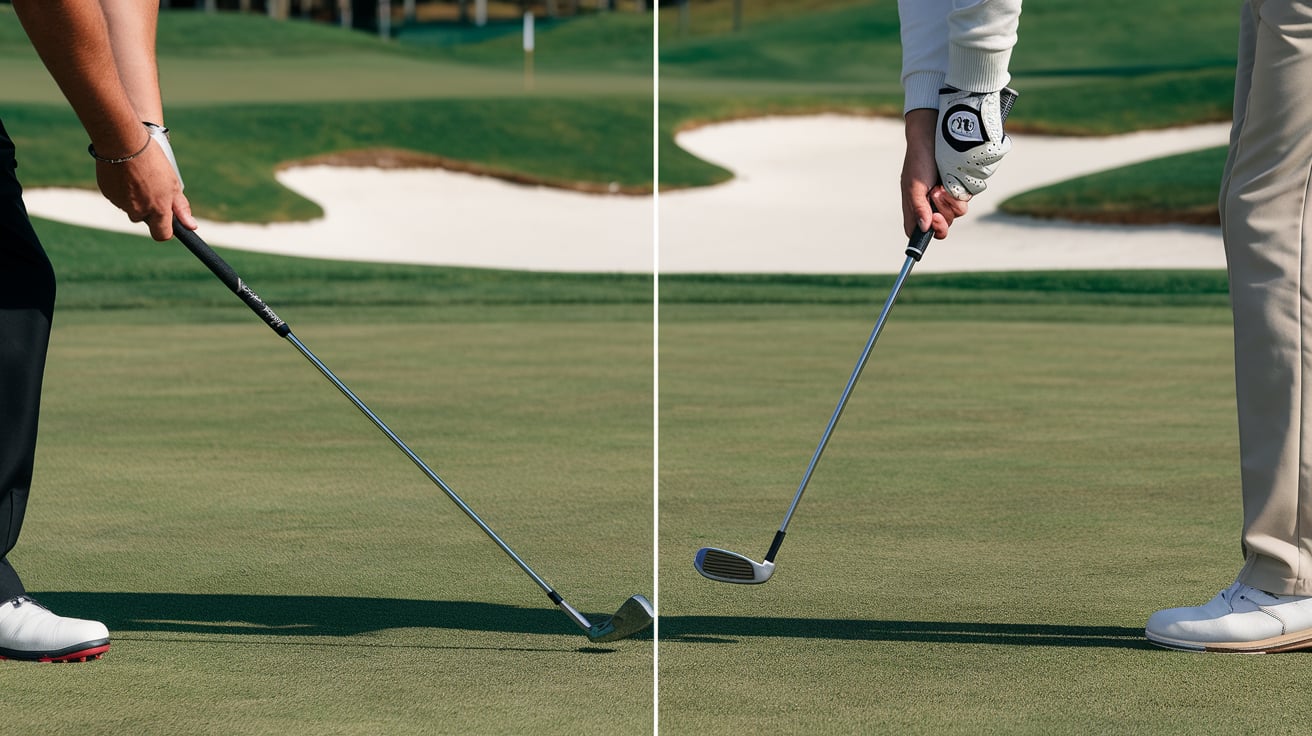
Quick answer: As a general rule, the ball moves progressively back in your stance as the club gets shorter. Play the driver off your lead heel, mid-irons in the center of your stance, and wedges slightly behind center. The exact spot also depends on your stance width and swing type, which this guide covers below.
Here’s what you’ll learn:
- The correct ball position for driver, fairway woods, hybrids, irons, and wedges
- A quick-reference chart you can screenshot and take to the range
- How to measure ball position correctly using your lead heel or sternum as a reference
- Common ball position mistakes and how they affect your shots
- How stance width, swing type, and body type change the “rules”
Why Golf Ball Position Matters
Many golfers immediately blame their swing when they hit fat shots, thin shots, slices, or weak pushes.
In reality, the problem often starts before the swing even begins.
Ball position determines where the clubhead meets the ball within the swing arc. Even moving the ball one or two inches can change:
- Contact quality
- Launch angle
- Angle of attack
- Clubface delivery
- Spin rate
- Shot direction
- Distance consistency
Think of your golf swing like a giant circle.
The lowest point of that circle should occur just after impact with an iron but slightly before impact with a driver, allowing the clubhead to travel upward into the ball.
When the ball is positioned incorrectly, the club reaches the ball at the wrong point in that circle, making solid contact much harder.
Before making major swing changes, always check your ball position first. It’s one of the easiest adjustments you can make and often delivers immediate results.
Golf Ball Position Quick Reference Chart
| Club | Ball Position | Reference Point | Typical Strike |
|---|---|---|---|
| Driver | Inside lead heel | Lead heel | Upward |
| 3-Wood | One ball-width inside lead heel | Lead heel | Sweeping |
| 5-Wood | Slightly forward of center | Lead heel | Sweeping |
| Hybrid | Slightly forward of center | Lead heel | Slightly descending |
| Long Irons (3–5) | Slightly forward of center | Sternum | Shallow descending |
| Mid Irons (6–7) | Center | Sternum | Descending |
| Short Irons (8–9) | Center to slightly back | Sternum | Descending |
| Pitching Wedge | Center | Sternum | Steep descending |
| Gap Wedge | Center | Sternum | Steep descending |
| Sand Wedge | Center | Sternum | Steep descending |
| Lob Wedge | Center | Sternum | Steep descending |
| Putter | Slightly forward of center | Sternum | Level |
Tip: Treat this chart as your baseline. Small adjustments based on your swing and the shot you’re trying to play are completely normal.
How to Measure Golf Ball Position Correctly
Many golfers judge ball position by eye, which often leads to inconsistent setup.
Instead, use one of these reliable methods every time.
Method 1: The Lead Heel Reference
This method works especially well with your driver and fairway woods.
- Take your normal stance.
- Set the club behind the ball.
- Look down at your lead heel.
- Position the ball according to the club you’re hitting.
For example:
- Driver: Inside lead heel.
- Fairway Wood: One ball-width behind driver position.
- Hybrid: Slightly forward of center.
Because your stance becomes wider with longer clubs, using your lead heel gives you a consistent visual reference.
Method 2: The Sternum Reference
Many PGA instructors prefer using your sternum rather than your feet for irons and wedges.
Why?
Because your feet move farther apart as clubs get longer, but your sternum always stays in the center of your body.
For irons:
- Mid irons should line up roughly beneath your sternum.
- Wedges should sit just behind it.
- Long irons should sit slightly in front of it.
Using your sternum removes the guesswork created by changing stance width.
The Step Method (The Easiest Way to Find Ball Position Every Time)
If you’re a beginner, trying to remember exact measurements for every club can feel overwhelming.
Instead, use this simple routine before every shot.
Step 1
Stand with both feet together.
Position the golf ball directly in the middle of your stance.
Step 2
Take a small step toward the target with your lead foot.
This step remains almost the same for every club.
Step 3
Move your trail foot away from the target.
The amount you move your trail foot determines your stance width and automatically changes your ball position.
- Wedges: Small step.
- Short Irons: Slightly wider.
- Mid Irons: Shoulder-width stance.
- Long Irons & Hybrids: Slightly wider.
- Driver: Widest stance with the ball now positioned inside your lead heel.
Instead of memorizing different positions for every club, you simply change the width of your stance while keeping your lead foot consistent.
This method is easy to learn, easy to repeat, and helps create a more consistent setup on the course.
Coach’s Tip
Before changing your swing, check these three setup fundamentals:
✅ Golf Ball Position
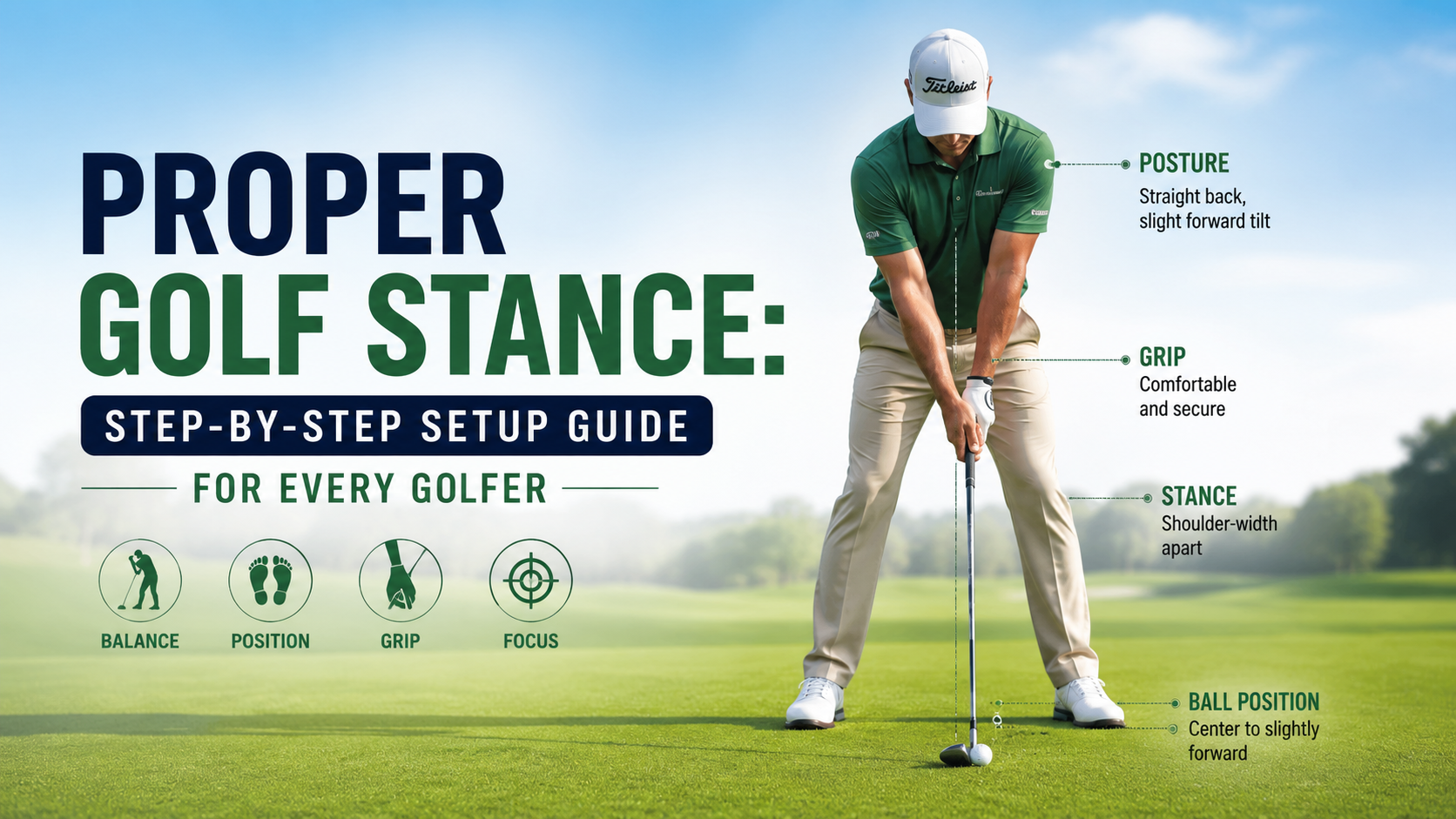
✅ Golf Stance
These three fundamentals influence almost every golf shot. Many golfers spend months trying to fix their swing when the real issue is an inconsistent setup.
Golf Ball Position for Driver
The driver is the only club in your bag that is designed to strike the ball on a slightly upward angle of attack. That’s why it requires the most forward ball position of any full-swing club.
For most golfers, the correct driver ball position is just inside the lead heel.
When combined with a wider stance and a slight spine tilt away from the target, this setup helps maximize launch angle while reducing unnecessary spin.
Driver Setup Checklist
- Ball positioned inside the lead heel
- Stance slightly wider than shoulder width
- Spine tilted slightly away from the target
- Hands positioned just behind the ball
- Tee height with roughly half the ball above the driver’s crown
Common Driver Ball Position Mistakes
| Mistake | Result |
|---|---|
| Ball too far back | Low launch, excessive spin, reduced distance |
| Ball too far forward | Toe strikes, pop-ups, inconsistent contact |
Coach’s Tip: If you’re struggling with your driver, check your ball position before changing your swing. Many golfers lose distance simply because the ball is too far back in their stance.
Golf Ball Position for Fairway Woods
Fairway woods are designed to sweep the ball off the turf rather than strike steeply downward.
A good starting position is about one ball-width behind your driver position, which usually places the ball just inside your lead heel.
This encourages clean contact while allowing the clubhead to stay shallow through impact.
Fairway Wood Setup
- Ball slightly forward of center
- Shoulder-width stance
- Minimal forward shaft lean
- Sweep the ball rather than dig into the turf
Golf Ball Position for Hybrids
Hybrids bridge the gap between irons and fairway woods.
They perform best when the ball sits slightly forward of center, allowing the club to deliver a shallow descending strike.
Avoid placing hybrids as far forward as a driver or as far back as a wedge.
Hybrid Setup
- Ball slightly forward of center
- Shoulder-width stance
- Moderate forward shaft lean
- Strike down slightly through impact
Golf Ball Position for Irons
Unlike woods, irons are designed to contact the ball before the club reaches the bottom of the swing arc.
That means ball position gradually moves backward as loft increases.
Long Irons (3–5)
Long irons are the most difficult clubs for many golfers because they require both speed and precise contact.
Play the ball slightly forward of center.
This promotes a shallow descending strike while still helping launch the ball high enough.
Mid Irons (6–7)
For most golfers, this is the neutral position.
Place the ball in the center of your stance, roughly beneath your sternum.
This encourages consistent compression and predictable ball flight.
Short Irons (8–9)
Move the ball slightly behind center.
A slightly steeper angle of attack helps create better distance control and cleaner contact.
Remember, we’re talking about only an inch or two—not a dramatic movement toward your back foot.
Golf Ball Position for Wedges
Wedges require the most precise strike of any full-swing club.
For standard full wedge shots, the ball should sit in the center or just slightly behind center.
This encourages:
- Ball-first contact
- Crisp turf interaction
- Better spin control
- Improved distance consistency
Standard Wedge Setup
- Narrow stance
- Ball centered
- Weight balanced or slightly favoring the lead side
- Hands slightly ahead of the ball
Specialty Wedge Shots
Certain shots require small adjustments.
| Shot Type | Ball Position |
|---|---|
| Standard Pitch | Center |
| Chip Shot | Slightly back of center |
| Bump-and-Run | Back of center |
| Flop Shot | Slightly forward |
| Greenside Bunker | Forward |
These adjustments help control trajectory and spin without changing your overall swing.
Does Stance Width Change Ball Position?
Yes.
This is one of the most misunderstood parts of golf setup.
As clubs get longer, your stance naturally becomes wider.
Even if the ball stays aligned with your lead heel, it moves farther away from the center of your body simply because your feet have moved.
That’s why many instructors prefer using your sternum as a reference point for irons.
General Rule
- Wider stance = longer clubs = ball appears farther forward.
- Narrower stance = shorter clubs = ball appears closer to center.
Understanding this relationship helps maintain consistent contact throughout the bag.
How Swing Type Affects Ball Position
The reference positions in this guide work for most golfers, but your swing characteristics may require small adjustments.
| Swing Type | Suggested Adjustment |
|---|---|
| Steep Swing | Move the ball slightly back |
| Shallow Swing | Move the ball slightly forward |
| Frequent Fat Shots | Check if the ball is too far forward |
| Frequent Thin Shots | Check if the ball is too far back |
| Chronic Slice | Ball position may be slightly too far forward (among other causes) |
| Chronic Hook | Ball position may be slightly too far back (among other causes) |
These adjustments should be subtle. Moving the ball more than an inch can significantly change impact conditions.
3 Simple Ball Position Drills
Changing your ball position during practice is easy.
Keeping it consistent on the course is much harder.
These drills help build reliable setup habits.
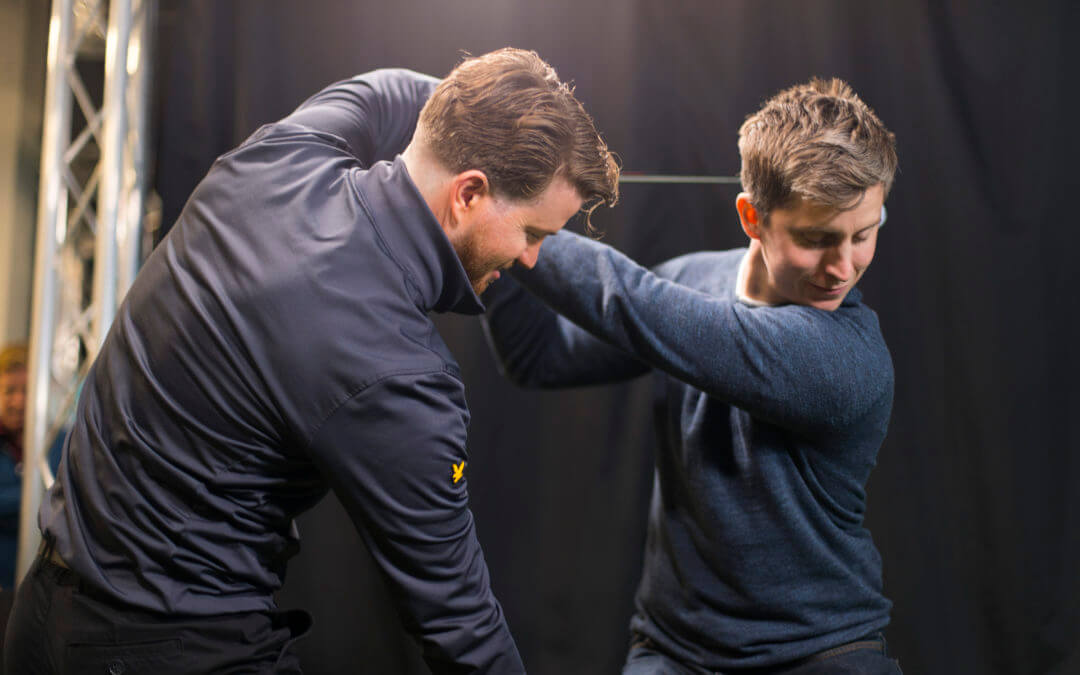
1. Mirror Drill
Stand in front of a full-length mirror.
Set up exactly as if you’re about to hit a shot.
Check:
- Ball position
- Shoulder alignment
- Spine tilt
- Head position
Repeat 20 times without hitting a ball.
2. Alignment Stick Drill
Place one alignment stick along your target line.
Place another perpendicular to it between your feet.
This creates a visual reference that makes ball position easy to repeat.
3. One-Club Progression Drill
Hit five balls with a wedge.
Without changing your lead foot position, gradually widen your stance as you move through each club in your bag.
Notice how the ball naturally moves farther forward with longer clubs.
This drill helps you understand the relationship between stance width and ball position instead of memorizing measurements.
Common Ball Position Mistakes
Mistake 1: Playing Every Club from the Same Position
Many golfers unknowingly use the same ball position for every club.
Result:
Poor contact, inconsistent trajectory, and unpredictable distance.
Fix:
Allow the ball position to move gradually forward as clubs become longer.
Mistake 2: Ball Too Far Forward
Symptoms:
- Fat shots
- High weak shots
- Ballooning drives
- Toe strikes
Fix:
Move the ball slightly back and recheck your setup.
Mistake 3: Ball Too Far Back
Symptoms:
- Thin shots
- Low ball flight
- Heavy divots
- Pulls and hooks
Fix:
Move the ball slightly forward until contact improves.
Mistake 4: Ignoring Setup Fundamentals
Ball position works together with:
- Grip
- Stance
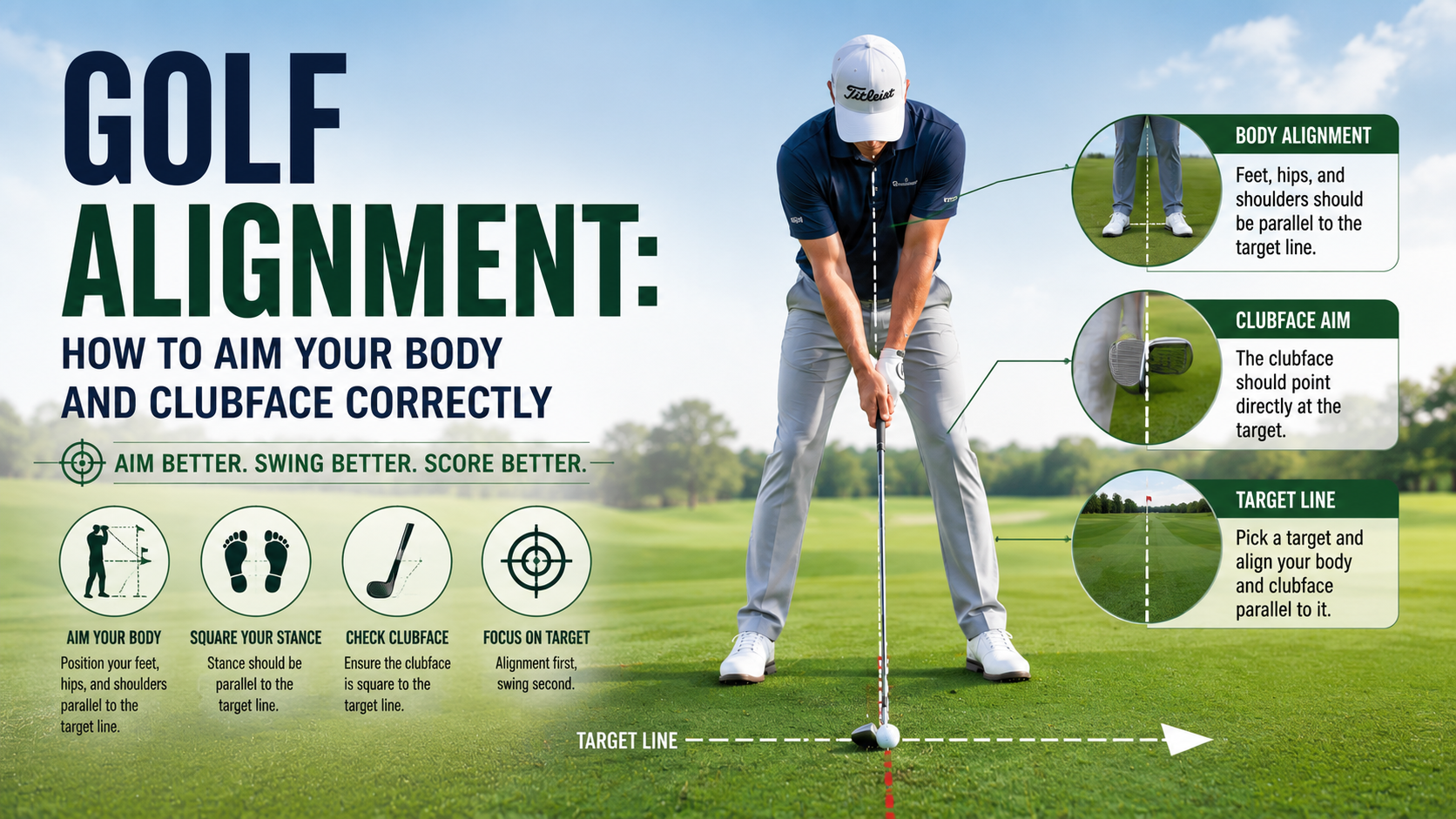
- Alignment
- Posture
Changing only one while ignoring the others rarely produces lasting improvement.
Coach’s Corner: If you hit one shot fat and the next one thin, don’t immediately blame your swing. Put an alignment stick across your stance and check your ball position first. Many golfers unknowingly let the ball drift during a practice session, leading to inconsistent contact.
Quick Self-Diagnosis
| If You Usually Hit… | First Check |
|---|---|
| Fat Shots | Ball too far forward |
| Thin Shots | Ball too far back |
| Low Punch Shots | Ball too far back |
| Ballooning Drives | Ball too far forward |
| Weak Pushes | Setup and ball position |
| Inconsistent Contact | Ball position consistency |
Remember: Ball position is one of the easiest fundamentals to fix, but it’s rarely the only cause of poor shots. Always evaluate it alongside your grip, stance, alignment, and swing mechanics.
Frequently Asked Questions (FAQs)
1. Where should the golf ball be in your stance?
As a general rule, the ball should move progressively forward in your stance as the clubs get longer. Play the driver off your lead heel, fairway woods slightly behind that position, mid irons near the center of your stance, and wedges in the center or just behind center.
2. What is the correct golf ball position for irons?
It depends on the iron you’re using.
- Long irons: Slightly forward of center
- Mid irons: Center of the stance
- Short irons: Center to slightly behind center
This setup promotes solid ball-first contact and a consistent descending strike.
3. Should ball position change with every club?
Yes.
Because each club has a different shaft length and loft, the ideal ball position changes gradually throughout the bag. Longer clubs require the ball farther forward, while shorter clubs perform best closer to the center of your stance.
4. Why does ball position matter?
Ball position determines where the clubhead meets the ball during the swing arc.
Incorrect ball position can lead to:
- Fat shots
- Thin shots
- Poor launch angle
- Loss of distance
- Inconsistent direction
5. Does golf ball position affect slicing?
It can contribute to a slice.
A ball positioned too far forward may encourage an out-to-in impact relationship for some golfers. However, grip, clubface angle, and swing path are usually bigger contributors to slicing.
6. Can ball position cause a hook?
Yes.
If the ball is excessively back in your stance, the clubface may close earlier through impact, increasing the likelihood of a hook or pull.
7. Should beginners use the same ball position for every club?
No.
Beginners should learn the correct progression from the start rather than using one position for every club. A simple approach is:
- Driver: Forward
- Irons: Center
- Wedges: Slightly behind center
8. Does stance width affect ball position?
Yes.
As your stance widens for longer clubs, the ball naturally moves farther forward relative to the center of your body. This is why many instructors prefer using your sternum as a consistent reference for irons.
9. How can I check my ball position at home?
Practice your setup in front of a mirror or use alignment sticks on the ground. Building a consistent pre-shot routine is one of the easiest ways to improve your setup.
10. Should ball position change for uphill or downhill lies?
Yes.
On uphill lies, many golfers move the ball slightly forward.
On downhill lies, moving the ball slightly back often helps produce cleaner contact.
11. Does ball position affect distance?
Absolutely.
With the driver, playing the ball too far back often reduces launch angle and increases spin, costing valuable distance. Proper ball position helps optimize both launch and carry.
12. Where should the ball be for chip shots?
For standard chip shots, the ball is usually played slightly behind the center of a narrow stance. This encourages a crisp, descending strike and better control around the green.
13. Should left-handed golfers reverse these positions?
Yes.
All ball position references in this guide assume a right-handed golfer. Left-handed players should simply reverse the setup, using the right heel instead of the left heel as the lead-side reference.
14. Can incorrect ball position cause shanks?
It can contribute, although shanks are usually caused by multiple setup or swing issues. Checking your ball position is one of the quickest fundamentals to verify before making major swing changes.
15. Is there one perfect ball position for every golfer?
No.
The positions in this guide are reliable starting points. Small adjustments based on your body type, swing characteristics, and shot preference are completely normal.
Quick Setup Checklist
Before every full swing, ask yourself:
✅ Is my ball position correct for this club?
✅ Is my stance width appropriate?
✅ Is my weight balanced?
✅ Is my grip secure but relaxed?
✅ Is my alignment aimed correctly?
A consistent setup leads to more consistent golf shots.
Key Takeaways
If you remember only a few things from this guide, make them these:
- Ball position should move gradually forward as clubs get longer.
- Driver belongs inside the lead heel.
- Mid irons work best from the center of your stance.
- Wedges perform best from the center or slightly behind center.
- Use your sternum as a reference for irons and wedges.
- Build the same setup before every shot to improve consistency.
- Check ball position before making major swing changes.
Final Thoughts
Mastering your golf ball position is one of the quickest ways to improve your ball striking without rebuilding your swing.
Small adjustments in where the ball sits can change launch angle, contact quality, distance, and shot shape. Before searching for complicated swing fixes, take a few seconds to check your setup. Many common ball-striking problems begin before the club ever starts moving.
Use the chart in this guide as your baseline, practice the Step Method until it becomes second nature, and make only small adjustments based on your swing and the shot you want to hit.
The more consistent your setup becomes, the more consistent your results will be.
Next Step
Now that you’ve learned where to position the golf ball, the next piece of the puzzle is learning how to build a repeatable setup.
Read next: Proper Golf Grip: How to Hold a Golf Club Correctly
Then continue with:
- Golf Stance Guide
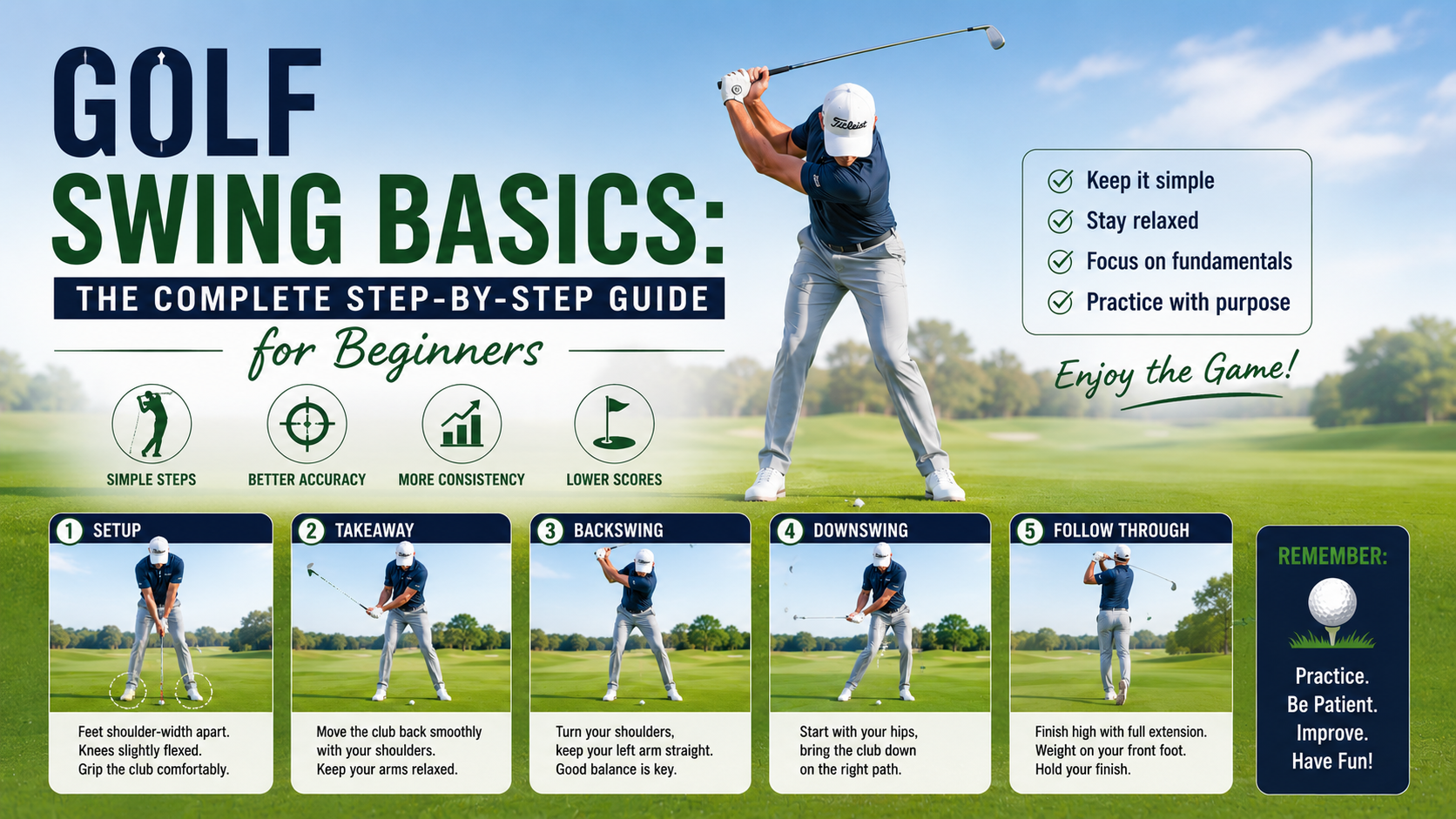
- Golf Swing Basics
- How to Fix a Slice
- How to Fix a Hook
Following this sequence will help you build a strong foundation before making more advanced swing changes.
For readers who want to learn more, consider referencing:
- PGA of America – Instructional articles and beginner golf tips.
- USGA – Official equipment rules and educational resources.
- The R&A – Golf rules and player education.
- Golf Pride – Grip sizing and equipment guides.

Similar Posts