Proper Golf Stance: The Complete Setup Guide
A weak or inconsistent stance is one of the most common and most overlooked causes of poor ball striking. Before the club ever moves, your stance determines your balance, your swing path, and how much power you can actually transfer into the ball.
Whether you’re a beginner learning the fundamentals or an experienced golfer trying to improve consistency, building a proper golf stance is one of the fastest ways to hit cleaner, more reliable shots.
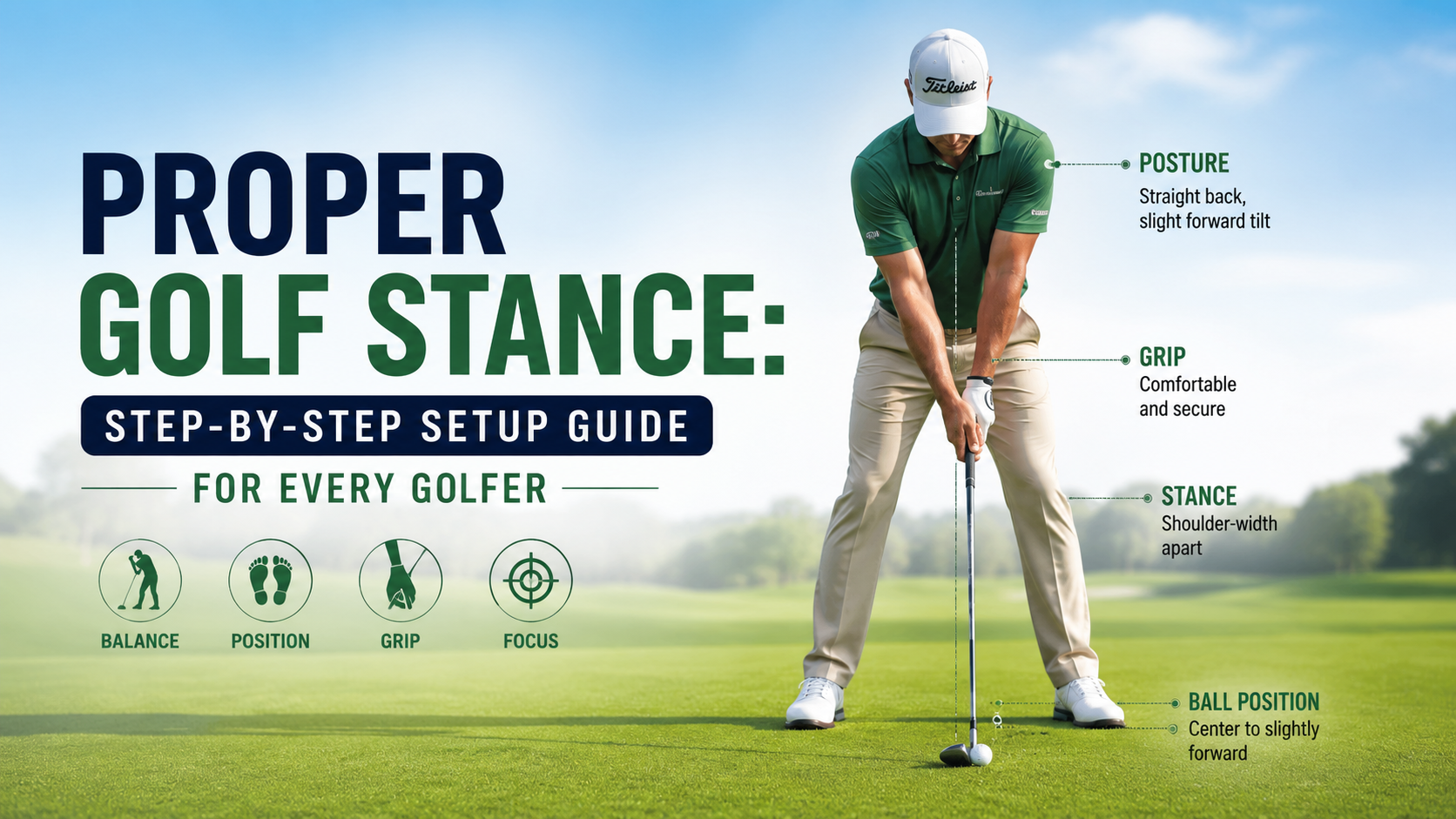
Quick Answer: A proper golf stance starts with feet roughly shoulder-width apart, knees slightly flexed, weight balanced on the balls of your feet, spine tilted forward from the hips, and arms hanging naturally under your shoulders. The exact stance width, weight distribution, and ball position should change slightly depending on the club you’re using.
In this guide, you’ll learn:
- The 5-step setup sequence for a proper golf stance
- How stance width changes from wedges to driver
- The correct weight distribution at address
- The relationship between stance and ball position
- Common setup mistakes and how to fix them
- Simple ways to check your stance at home
- Expert tips to build a consistent setup every time
Quick Reference Setup Chart
Use this chart as a quick reminder before you play.
| Club | Stance Width | Ball Position | Weight Distribution |
|---|---|---|---|
| Driver | Slightly wider than shoulders | Inside lead heel | 40% Lead / 60% Trail |
| Fairway Woods | Shoulder width | Slightly forward of center | 50 / 50 |
| Long Irons | Shoulder width | Slightly forward of center | 50 / 50 |
| Mid Irons | Shoulder width | Center | 50 / 50 |
| Short Irons | Slightly narrower | Center | 55 / 45 |
| Wedges | Narrow | Center to slightly back | 60 / 40 |
| Putter | Comfortable narrow stance | Slightly forward of center | Evenly balanced |
Quick Tip: As your clubs get longer, your stance naturally becomes wider and the ball moves progressively forward.
What Is a Proper Golf Stance?
A golf stance is the athletic position you build before starting the swing. It includes the placement of your feet, knees, hips, spine, shoulders, arms, and body weight.
A proper stance isn’t about copying a professional golfer’s appearance. Instead, it creates a balanced, repeatable setup that allows your body to rotate freely while returning the clubface to the ball consistently.
Think of your stance as the foundation of your golf swing. Even a technically sound swing becomes difficult to repeat if your setup changes from shot to shot.
That’s why PGA instructors often teach grip, stance, and ball position before discussing swing mechanics.
Why Your Golf Stance Matters
Many golfers immediately blame their swing after hitting a poor shot.
In reality, many problems begin long before the club starts moving.
Your stance influences:
- Balance
- Stability
- Rotation
- Swing plane
- Weight transfer
- Ball contact
- Shot consistency
If your stance changes from one shot to the next, your swing must constantly make compensations.
Building a repeatable stance reduces those compensations and allows your natural swing to become much more consistent.
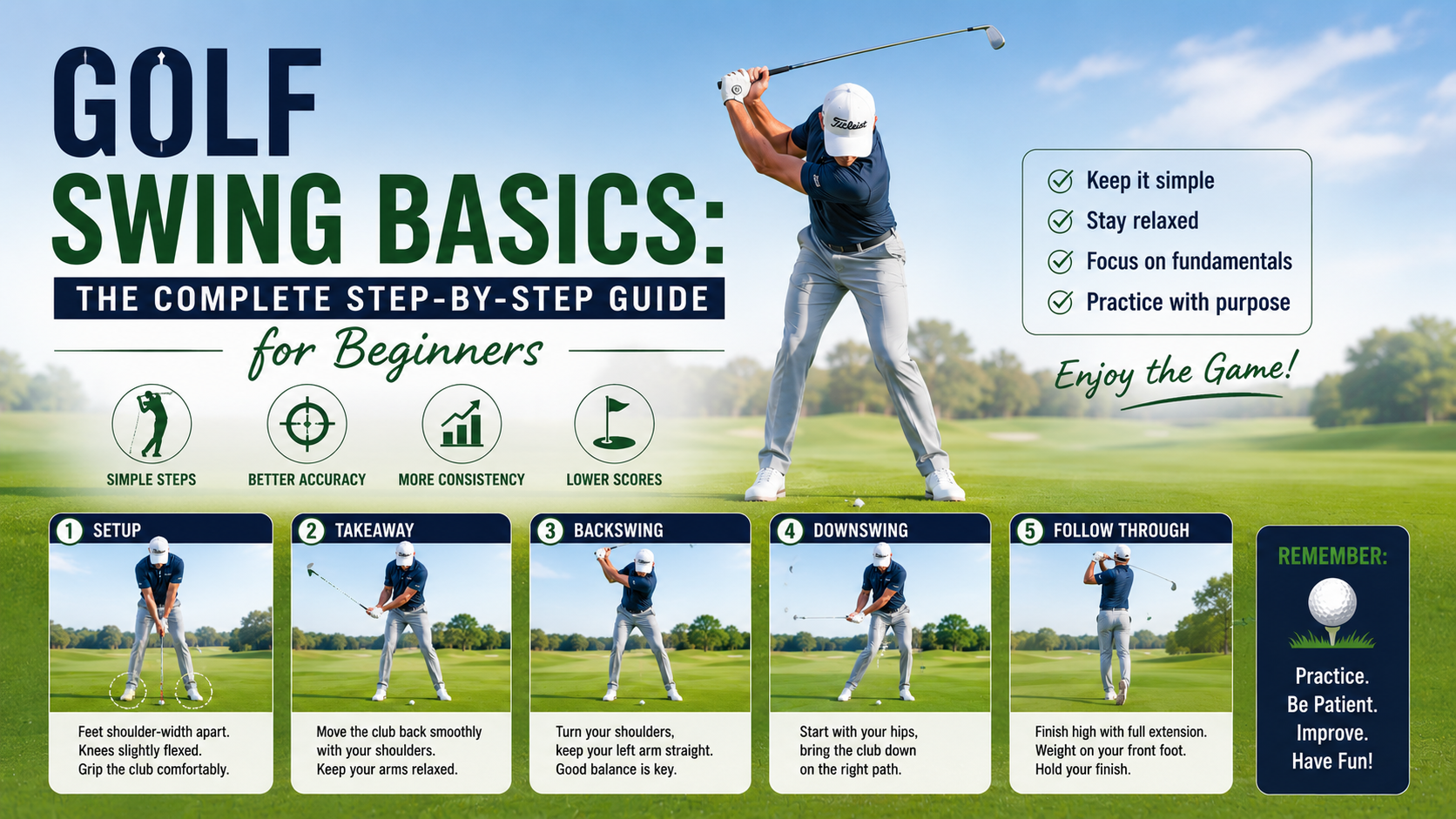
The 5-Step Proper Golf Stance Setup
Follow this sequence every time you address the golf ball. Once it becomes part of your pre-shot routine, it takes only a few seconds.
Step 1: Set Your Feet to the Right Width
Stance width should match the club you’re using.
| Club | Recommended Stance Width |
|---|---|
| Driver | Shoulder-width or slightly wider |
| Fairway Woods | Shoulder-width |
| Mid Irons | Shoulder-width |
| Short Irons | Slightly narrower |
| Wedges | Narrow |
| Putter | Comfortable and narrow |
A wider stance creates stability for faster swings.
A narrower stance improves control on shorter shots.
If your stance remains identical for every club, you’re probably making solid contact more difficult than it needs to be.
Step 2: Flex Your Knees Slightly
Your knees should have a slight athletic flex.
Think about how a basketball player or tennis player stands while waiting for action.
Avoid:
- Locked knees
- Deep squats
- Excessive tension
A balanced athletic position allows your body to rotate naturally without restricting movement.
Step 3: Tilt Forward From Your Hips
Many golfers bend from the waist instead of the hips.
That’s one of the biggest setup mistakes.
Instead:
- Stand tall.
- Push your hips backward.
- Keep your back neutral.
- Allow your chest to tilt naturally toward the golf ball.
This creates room for your shoulders to rotate freely during the swing.
Step 4: Balance Your Weight Correctly
Weight should remain balanced over the balls of your feet—not your heels or toes.
General guideline:
- Driver: 40% lead foot / 60% trail foot
- Most irons: 50% / 50%
- Wedges: 60% lead foot / 40% trail foot
If your weight shifts too far toward your heels, thin and topped shots become more common.
If it moves toward your toes, you’ll often lose balance during the swing.
Step 5: Let Your Arms Hang Naturally
After setting your posture, allow both arms to hang naturally from your shoulders.
Don’t reach for the golf ball.
Don’t crowd yourself either.
Your hands should naturally fall into position without tension.
This simple step improves:
- Club control
- Swing path
- Consistency
- Contact quality
Coach’s Tip
Many golfers believe their swing changes during practice.
Often, it doesn’t.
Their stance changes.
Every few shots, place an alignment stick across your toes and check:
- Stance width
- Ball position
- Foot alignment
Small setup changes happen gradually during a practice session without most golfers noticing them. Spending just a few seconds checking your stance can restore solid contact before you start making unnecessary swing changes.
Golf Stance Checklist
Before every shot, run through this simple checklist until it becomes second nature.
✅ Feet set to the correct width for the club
✅ Knees slightly flexed, not locked or over-bent
✅ Spine tilted forward from the hips
✅ Weight balanced on the balls of your feet
✅ Arms hanging naturally beneath your shoulders
✅ Shoulders, hips, knees, and feet parallel to the target line
✅ Ball positioned correctly for the club
A consistent pre-shot routine often leads to more consistent golf shots.
How Stance Width Changes by Club
Your stance shouldn’t stay exactly the same for every club.
As the club gets longer, your stance naturally becomes wider to create stability. Shorter clubs require less stability and more precision, so your stance narrows accordingly.
| Club | Stance Width | Why It Changes |
|---|---|---|
| Driver | Slightly wider than shoulders | Maximum stability for the longest swing |
| Fairway Woods | Shoulder width | Balanced control and power |
| Long Irons | Shoulder width | Stable while maintaining good rotation |
| Mid Irons | Shoulder width | Neutral position for consistent contact |
| Short Irons | Slightly narrower | Better precision and control |
| Wedges | Narrow | Easier weight transfer and crisp contact |
| Putter | Comfortable narrow stance | Stability during a small stroke |
Remember: The goal isn’t to create dramatically different stances. Small adjustments are usually enough.
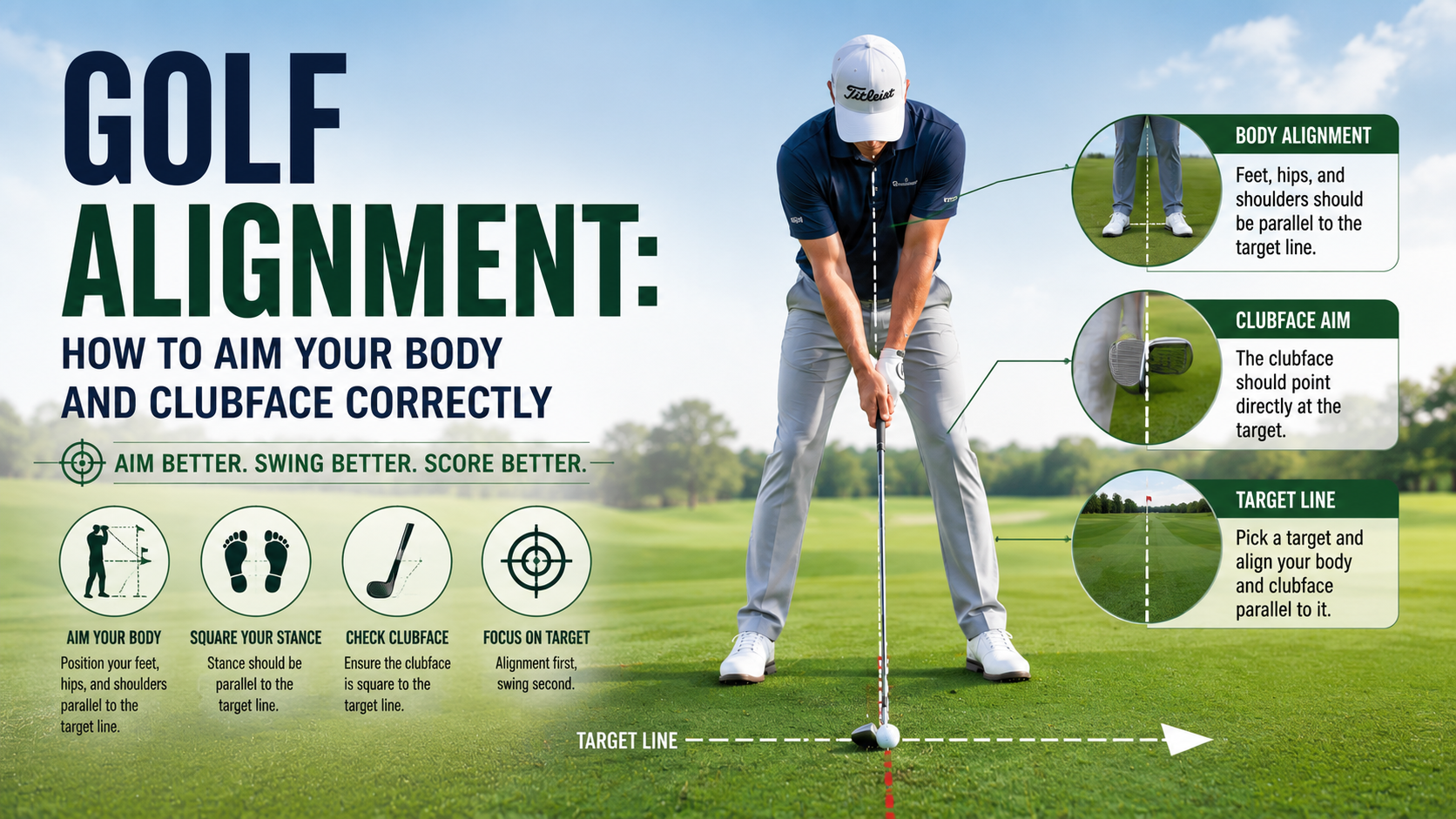
Golf Stance and Alignment
Many golfers confuse stance with alignment, but they aren’t the same.
- Stance refers to how your body is positioned.
- Alignment refers to where your body is aimed.
Even a perfect stance won’t produce consistent shots if your alignment is incorrect.
Simple Alignment Check
- Pick a target.
- Choose a spot a few feet in front of your ball.
- Aim your clubface at that intermediate target.
- Set your feet, hips, and shoulders parallel to the target line.
Imagine railroad tracks.
- One rail represents your target line.
- The other represents your feet and body.
The two lines should remain parallel, never crossing.
Common Golf Stance Mistakes (and How to Fix Them)
Mistake 1: Standing Too Upright
Standing too tall limits body rotation and encourages an arms-only swing.
Fix
Hinge from your hips while maintaining a neutral spine.
Mistake 2: Rounded Back (C-Posture)
Rounding your shoulders reduces shoulder turn and limits power.
Fix
Keep your chest up, shoulders relaxed, and hinge from your hips instead of your waist.
Mistake 3: Too Much Lower Back Arch (S-Posture)
Overarching the lower back creates unnecessary tension and can even contribute to lower back discomfort.
Fix
Engage your core and keep your pelvis in a neutral position.
Mistake 4: Locked Knees
Locked knees reduce athletic movement and make weight transfer difficult.
Fix
Maintain a slight athletic knee flex throughout your setup.
Mistake 5: Weight on Your Heels
This often causes:
- Thin shots
- Topped shots
- Loss of balance
Fix
Feel light pressure under the balls of your feet.
Mistake 6: Weight on Your Toes
Leaning too far forward often leads to:
- Fat shots
- Pulls
- Loss of balance
Fix
Center your balance so you feel stable and athletic.
Mistake 7: Reaching for the Ball
Standing too far away disconnects your arms from your body.
Fix
Build your posture first, then let your arms hang naturally before gripping the club.
Quick Self-Diagnosis
If you’re struggling with ball striking, use this table before changing your swing.
| Problem | Check This First |
|---|---|
| Fat Shots | Weight too far forward or poor posture |
| Thin Shots | Standing up during the swing or weight on heels |
| Slice | Open alignment or shoulders aimed left |
| Hook | Closed stance or shoulders aimed right |
| Push | Ball too far back or poor alignment |
| Pull | Open body alignment |
| Poor Balance | Incorrect stance width |
| Inconsistent Contact | Inconsistent setup routine |
Many swing faults actually begin with inconsistent setup rather than poor swing mechanics.
How to Check Your Golf Stance at Home
You don’t need a driving range to improve your setup.
These simple drills can help you build a consistent stance anywhere.
Mirror Check
Stand in front of a full-length mirror.
Look for:
- Neutral spine
- Slight knee flex
- Balanced posture
- Relaxed shoulders
Practice holding your setup for 10–15 seconds.
Smartphone Video
Place your phone directly in front of you and then down the target line.
Record your setup and compare it to your normal address position.
You’ll often notice posture mistakes that are difficult to feel.
Alignment Stick Drill
Lay one alignment stick toward your target.
Place another across your toes.
This instantly shows whether your stance and alignment remain parallel.
Setup Repetition Drill
Without hitting a ball:
- Walk into your setup.
- Build your stance.
- Step away.
- Repeat 20 times.
This develops muscle memory far faster than simply hitting golf balls.
Golf Stance for Beginners
If you’re new to golf, don’t try to perfect every detail on day one.
Instead, focus on these four fundamentals:
- Stand about shoulder-width apart.
- Keep a slight bend in your knees.
- Hinge forward from your hips.
- Balance your weight over the balls of your feet.
Once these feel natural, begin adjusting your stance width for different clubs.
Trying to master everything at once often creates unnecessary tension and inconsistency.
Coach’s Corner
One of the biggest mistakes beginners make is changing their swing after every bad shot.
Instead, check your setup first.
Ask yourself:
- Was my stance the correct width?
- Was my weight balanced?
- Was the ball in the correct position?
- Was I properly aligned?
Professional coaches almost always check setup before making swing changes because small setup errors often create much larger swing problems.
Frequently Asked Questions (FAQ)
What is the proper golf stance?
A proper golf stance is a balanced, athletic setup with your feet positioned according to the club you’re using, slight knee flex, a forward hip hinge, balanced weight over the balls of your feet, and your arms hanging naturally beneath your shoulders. This setup creates the stability needed for a consistent golf swing.
Longer clubs require more stability, while shorter clubs benefit from increased control.
Should my knees be bent in a golf stance?
Yes. Your knees should have a slight athletic flex. Avoid locking your knees or squatting too deeply, as both can reduce balance and restrict body rotation.
Where should my weight be during setup?
Weight should be balanced over the balls of your feet.
Does golf stance change with different clubs?
Yes. As clubs become longer, your stance naturally widens. Your ball position also moves progressively forward.
Should beginners use the same stance for every club?
No. Beginners should learn how stance width changes throughout the bag instead of using one setup for every club.
Can poor stance cause a slice?
It can contribute. Open alignment, poor balance, and incorrect ball position can all encourage a slice.
Can poor stance cause a hook?
Yes. A closed stance combined with poor alignment may encourage a hook or pull. Checking your setup before changing your swing is always a smart first step.
Does stance affect distance?
Yes. A stable stance allows you to rotate efficiently and transfer energy into the golf ball. Poor balance often leads to slower clubhead speed and inconsistent distance.
Key Takeaways
If you remember only a few things from this guide, make them these:
- Build your stance before thinking about your swing.
- Match your stance width to the club you’re using.
- Balance your weight over the balls of your feet.
- Hinge from your hips instead of your waist.
- Keep your knees athletic, not locked or over-flexed.
- Let your arms hang naturally without reaching.
- Check your setup regularly during practice.
- Small setup adjustments often produce big improvements.
Final Thoughts
Every great golf swing starts with a great setup.
While many golfers spend countless hours searching for swing fixes, the truth is that a consistent golf stance often solves problems before the club ever starts moving.
By learning how to adjust your stance width, maintain athletic posture, distribute your weight correctly, and build the same setup before every shot, you’ll give yourself the best chance to strike the ball more consistently.
Don’t expect perfection overnight.
Instead, focus on repeating the same setup every time you practice. As your stance becomes more consistent, your ball striking, confidence, and overall performance will improve naturally.
The best golfers don’t just practice their swing; they practice their setup.
Coach’s Final Tip
Before every practice session, spend five minutes without hitting a single golf ball.
Simply rehearse your setup:
- Build your stance.
- Check your posture.
- Verify your ball position.
- Confirm your alignment.
- Reset and repeat.
This simple routine builds muscle memory faster than mindlessly hitting dozens of golf balls, and it helps ensure every practice session starts with solid fundamentals.

Similar Posts