Golf Alignment: How to Aim Your Body and Clubface Correctly
Most golfers who struggle with consistent aim aren’t actually misreading the target; they’re misaligning their body without realising it. Poor alignment is one of the most common, least visible setup errors in golf, because it feels correct even when it isn’t.
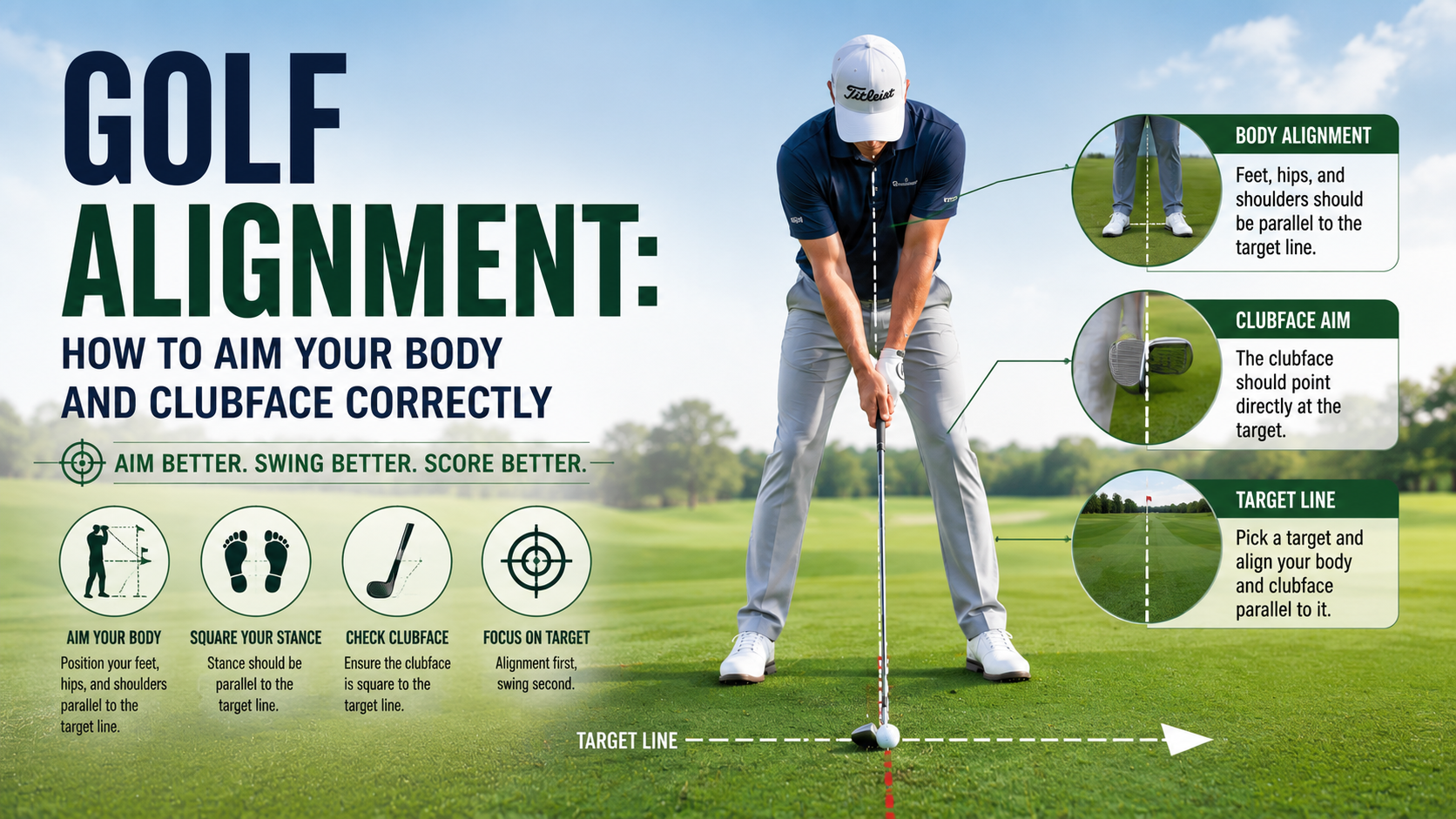
Quick answer: Proper golf alignment means your clubface points at the target while your feet, hips, and shoulders are aligned parallel to the target line like train tracks, with the ball-to-target line on one rail and your body line on the other. Most golfers misalign by aiming their bodies directly at the target rather than parallel to it.
Here’s what you’ll learn:
- The train-track method for correct alignment, step by step
- Why most golfers unknowingly aim right or left of target
- How to practice alignment using alignment sticks
- Common alignment mistakes and the ball flights they cause
- How alignment connects to stance, ball position, and swing path
What Is Golf Alignment?
Golf alignment refers to how your body and clubface are aimed relative to your target before the swing. It has two parts:
- Clubface alignment — where the clubface points at address, which is the single biggest factor in starting direction.
- Body alignment — how your feet, hips, and shoulders are oriented relative to the target line.
Both need to work together. A square clubface with misaligned shoulders or the reverse still produces inconsistent shots, even if your swing mechanics are otherwise sound.
Why Golf Alignment Is So Easy to Get Wrong
Most golfers instinctively aim their body directly at the target, the same way they’d aim when throwing a ball. But in golf, your body needs to align parallel to the target line, not directly at it, because you’re standing to the side of the ball, not behind it.
This creates a visual illusion: when your body is actually parallel to the target line, it can feel like you’re aiming to the right of the target (for a right-handed golfer). This is the single biggest reason golfers misalign: they don’t notice the correct position until they’ve trained it.
The Train-Track Method: Step-by-Step Alignment
This is the most widely taught method for checking alignment, and it works for any club in the bag.
- Stand behind the ball and pick a small, specific target: a branch, a sprinkler head, a spot on the fairway, not just “that direction.
- Pick an intermediate target a foot or two in front of the ball, directly on the line to your target. This is far easier to aim at accurately than something 150+ yards away.
- Set your clubface first, squared to that intermediate target, before setting your feet.
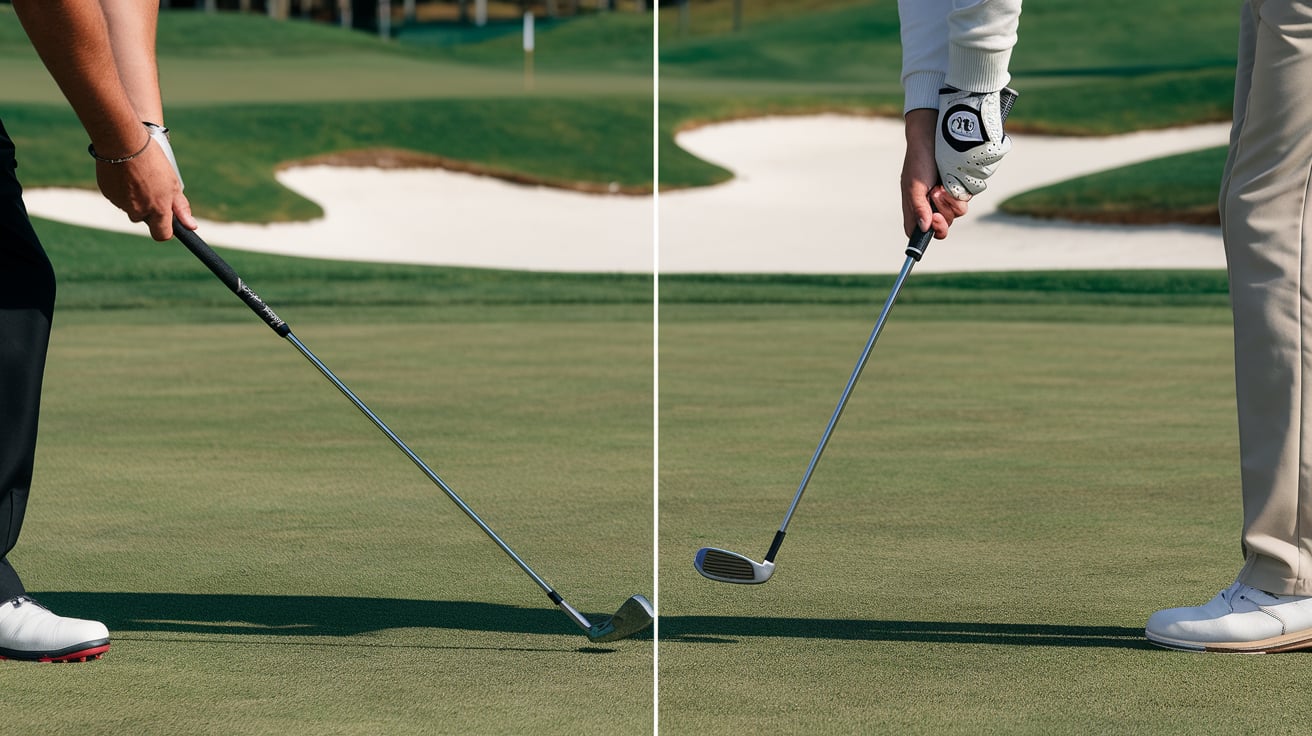
- Set your feet, knees, hips, and shoulders parallel to the target line — not aimed at the target itself. Picture two train tracks: one running from the ball to the target, the other running along your feet.
- Do a final check from behind occasionally during practice, stepping back to see if your setup actually matches what you intended.
Alignment Quick-Reference Table
| Element | Correct Alignment |
|---|---|
| Clubface | Square to the target (or intermediate target) |
| Feet | Parallel to the target line |
| Knees | Parallel to the target line |
| Hips | Parallel to the target line |
| Shoulders | Parallel to the target line |
| Eyes | Level, looking down the target line |
If any one of these is off, shoulders aimed right while feet are square, for example, the swing path and clubface often compensate unconsciously, leading to inconsistent shots.
How to Practice Golf Alignment With Alignment Sticks
Alignment sticks are the simplest, most reliable tool for training correct aim, and they’re inexpensive compared to most training aids.
Basic setup:
- Place one stick on the ground pointing at your target, just outside the ball, representing your ball-to-target line.
- Place a second stick parallel to the first, just outside your toes, representing your body line.
- Practice swings with both sticks down until parallel alignment starts to feel normal, not “aimed right.”
Progression tip: Once parallel alignment feels natural with the sticks down, practice occasionally without them, then place them back down periodically to check you haven’t drifted back to old habits.
Common Golf Alignment Mistakes (and Fixes)
Mistake 1: Aiming the Body Directly at the Target
This is the most common alignment error. It feels natural but leaves your body aimed right of target (for right-handed golfers), which often gets misread as needing to swing left, leading to compensations that cause a pull or a slice.
Fix: Use the train-track method and check with alignment sticks until parallel feels normal.
Mistake 2: Setting the Clubface After the Feet
Many golfers set their stance first, then aim the clubface last. This makes it much harder to aim accurately, since you’re now aiming relative to your own body instead of the target.
Fix: Always square the clubface to an intermediate target first, then build your stance around it.
Mistake 3: Shoulders Aimed Differently Than Feet
It’s common for shoulders to open or close relative to the feet without the golfer noticing, especially under pressure.
Fix: Periodically check shoulder alignment specifically, either with a mirror, video, or a second alignment stick placed across the chest.
Mistake 4: Using a Distant Target Only
Aiming only at a target 150+ yards away, without an intermediate point, makes small aiming errors much more likely.
Fix: Always pick an intermediate target a foot or two in front of the ball as part of your routine.
Mistake 5: Never Checking From Behind
Alignment can feel correct in the moment but be visibly off when viewed from directly behind the ball.
Fix: During practice sessions, occasionally step behind the ball after taking your stance to visually confirm alignment.
How Alignment Affects Ball Flight
| Ball Flight Issue | Possible Alignment Cause |
|---|---|
| Consistent slice | Body aligned left of target with an open clubface |
| Consistent hook | Body aligned right of target with a closed clubface |
| Pull (straight left) | Body aligned left, clubface square to body, not target |
| Push (straight right) | Body aligned right, clubface square to body, not target |
| Inconsistent direction | Alignment drifting shot to shot, no consistent routine |
Alignment isn’t the only cause of a slice or hook, but it’s one of the fastest things to rule out before assuming the issue is swing path or clubface rotation.
Golf Alignment vs. Golf Stance: What’s the Difference?
These two are closely related but answer different questions:
| Term | What It Answers |
|---|---|
| Golf Stance | How are my feet, knees, and posture positioned? |
| Golf Alignment | Where is my body aimed relative to the target? |
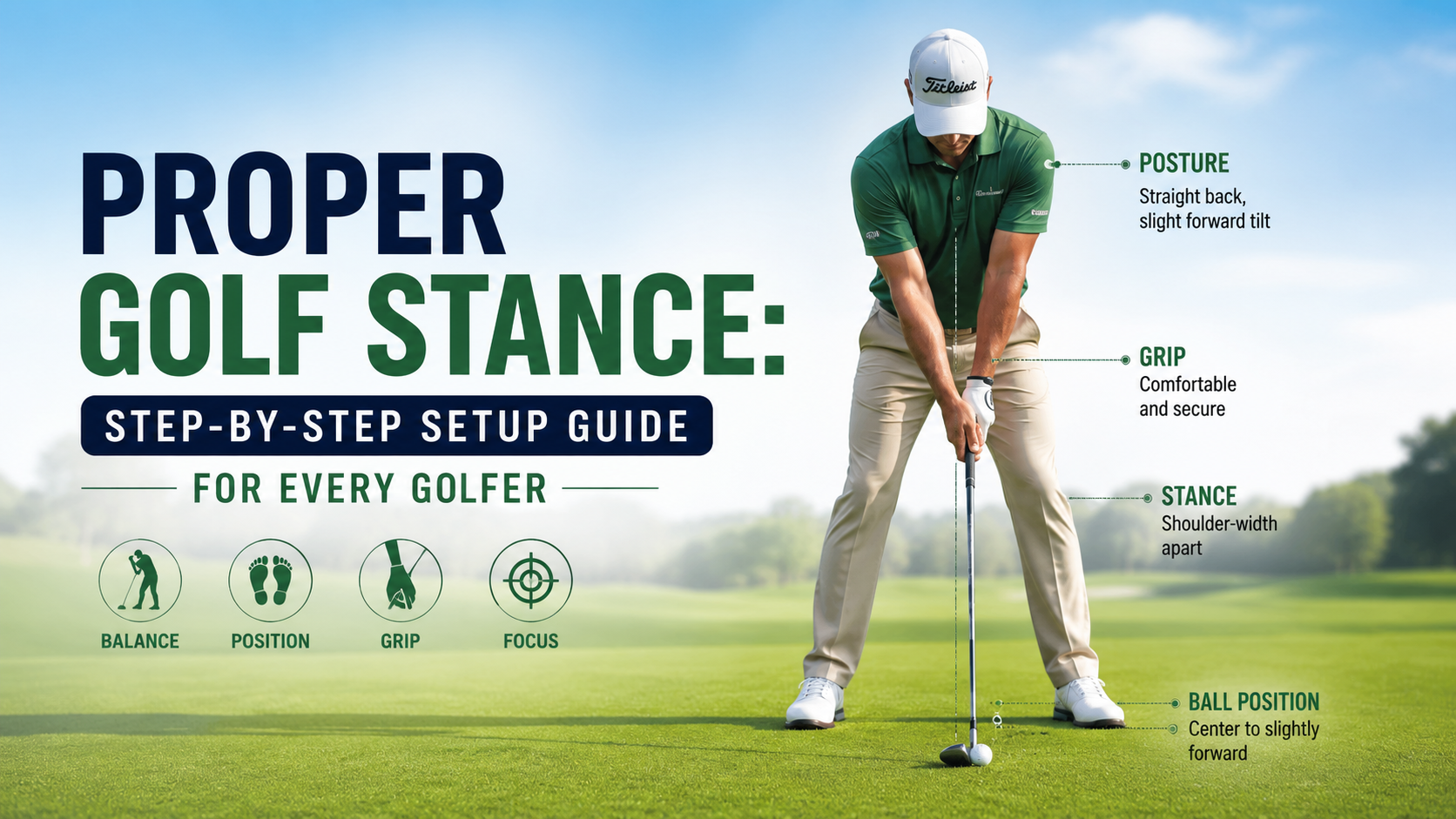
You can have a technically correct stance good width, good posture while still being aimed well off target. That’s why alignment deserves its own check in your pre-shot routine, separate from stance and posture.
Golf Alignment for Beginners: Keep It Simple
If you’re new to golf, don’t worry about perfecting every alignment detail right away. Start with this simplified version:
- Pick a small intermediate target a foot or two in front of the ball.
- Square the clubface to that spot.
- Set your feet parallel to the ball-to-target line, not aimed directly at the target.
Practising with two alignment sticks on the range, even for just ten minutes, does more to build a lasting feel for correct alignment than reading about it alone.
Frequently Asked Questions
What is proper golf alignment?
Proper golf alignment means the clubface is square to the target while the feet, hips, and shoulders are parallel to the target line, similar to train tracks running side by side.
Why do golfers aim right without realising it?
Because standing to the side of the ball creates a visual illusion when the body is actually parallel to the target line, it can feel like it’s aimed right of the target, which is why most golfers misalign without noticing.
How do you check your alignment in golf?
The most reliable method is using two alignment sticks: one on the ball-to-target line, one along your toe line, so you can visually compare your setup to correct parallel alignment.
What is the train-track method in golf?
It’s a way of visualising alignment where the ball-to-target line and your body line run parallel, like two train tracks, rather than converging at the target.
Does alignment cause a slice?
It can contribute to one. Aligning the body left of target with an open clubface is a common combination that produces a slice, though grip and swing path are also common factors.
What is an intermediate target in golf?
It’s a small, specific spot a foot or two in front of the ball, directly on the line to your actual target, used to aim more accurately than aiming at a distant target alone.
Should I aim my feet at the target?
No. Feet should be aligned parallel to the target line, not aimed directly at the target itself, since you’re standing beside the ball rather than behind it.
How do alignment sticks help?
They give you a visual, physical reference for both the ball-to-target line and your body line, making it much easier to train correct parallel alignment through repetition.
Is alignment the same as stance?
No. Stance refers to foot width, knee flex, and posture, while alignment refers specifically to where your body and clubface are aimed relative to the target.
Can poor alignment cause inconsistent shots even with a good swing?
Yes. A technically sound swing built on a misaligned setup will still produce inconsistent direction, since the swing is simply repeating the same aim error each time.
How often should I check my alignment during a round?
It’s worth doing a quick alignment check clubface first, then body parallel before every full shot, since alignment tends to drift without a consistent routine.
Does alignment matter for putting too?
Yes. Misaligned shoulders and feet on the green are a common cause of putts that consistently miss to one side, even when the stroke itself feels solid.
What’s the fastest way to fix alignment issues?
Practising regularly with two alignment sticks on the range is generally the fastest way to build a reliable feel for correct alignment, since it removes the guesswork.
Why does correct alignment sometimes feel wrong?
Because most golfers are used to instinctively aiming their body at the target, so true parallel alignment often feels like it’s aimed to the right until it’s been practised and retrained.
Key Takeaways
- Proper golf alignment means the clubface is square to the target while your feet, hips, and shoulders sit parallel to the target line, not aimed directly at it.
- Most golfers misalign without realising it, because correct parallel alignment can feel like aiming right of target.
- Alignment sticks are the most reliable, low-cost way to train correct alignment through repetition.
- Alignment works together with stance and ball position; all three should be checked as part of a consistent pre-shot routine.

Similar Posts