Golf Swing Tips That Fix the Real Problem, Not Just the Symptom

A slice, a chunked iron, a shot that comes out low and dead right most golfers already know what their bad shot looks like. What they don’t usually know is why it keeps happening, which is why so many swing tips fail to stick. You try the tip, get one good shot, and the old miss comes back within a few holes. That pattern usually means the advice targeted a symptom instead of its cause.
This guide works the other way around: symptom first, likely cause second, correction third. If you already know your specific miss, you can jump to the section that matches it. If you’re not sure, the sequencing and setup sections below cover where most swing problems actually start.
Why Most Swing Fixes Don’t Stick
A slice, for example, isn’t really a swing path problem or a clubface problem it’s usually both, interacting in a specific way. An open clubface relative to your swing path at impact is what curves the ball, and that relationship can come from your grip, your setup, your transition, or some combination of all three. A tip that only addresses “swing more from the inside” without checking clubface angle can leave the real cause untouched.
This is also why one-size-fits-all swing advice from a video or a golfing buddy sometimes makes things worse before it makes them better. The advice might be technically correct and still be the wrong fix for your specific pattern.
The Setup Errors That Get Blamed on the Swing
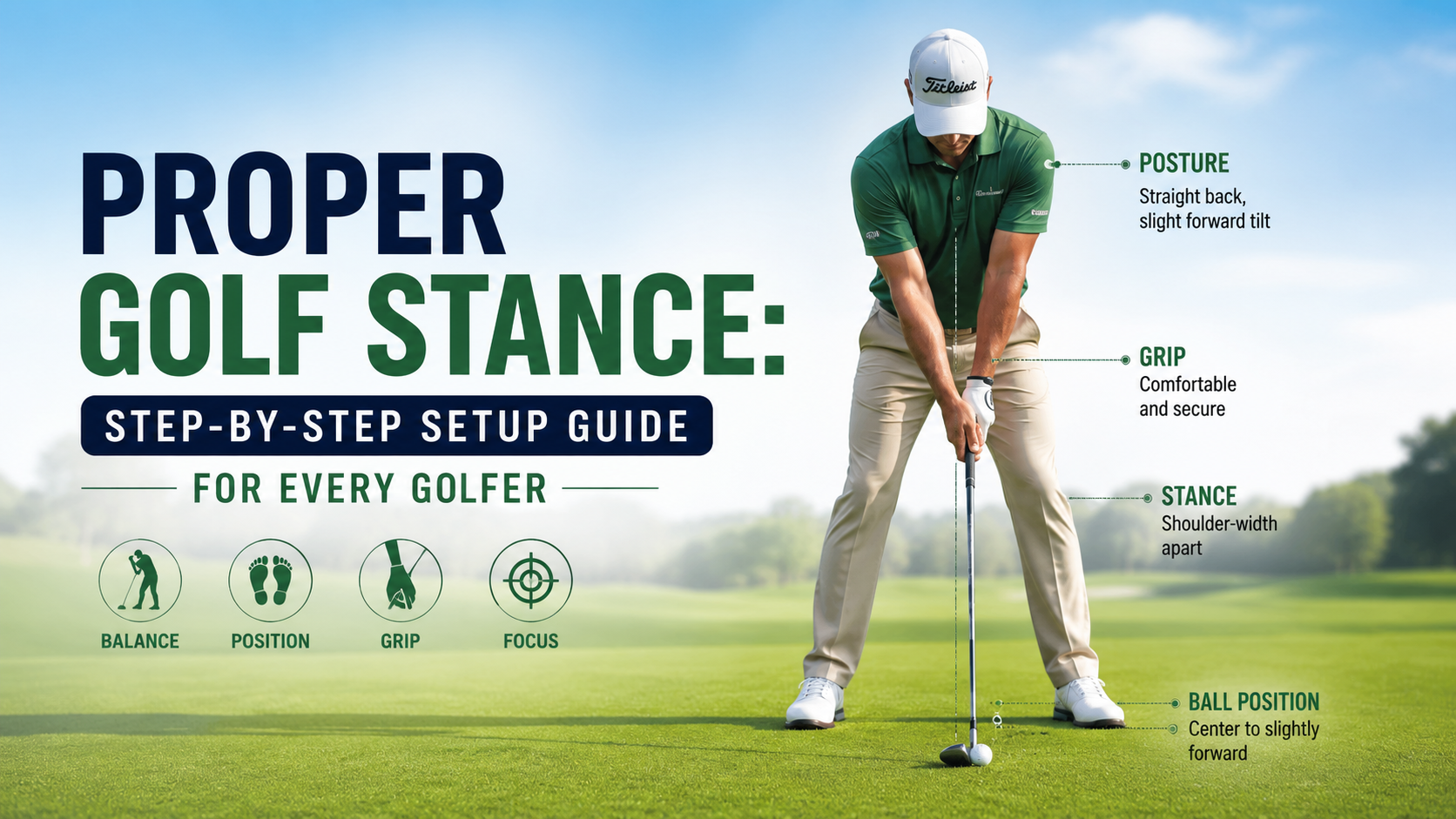
Before touching swing mechanics, it’s worth ruling out setup, since a flawed setup produces a compensation that looks like a swing flaw but isn’t one.
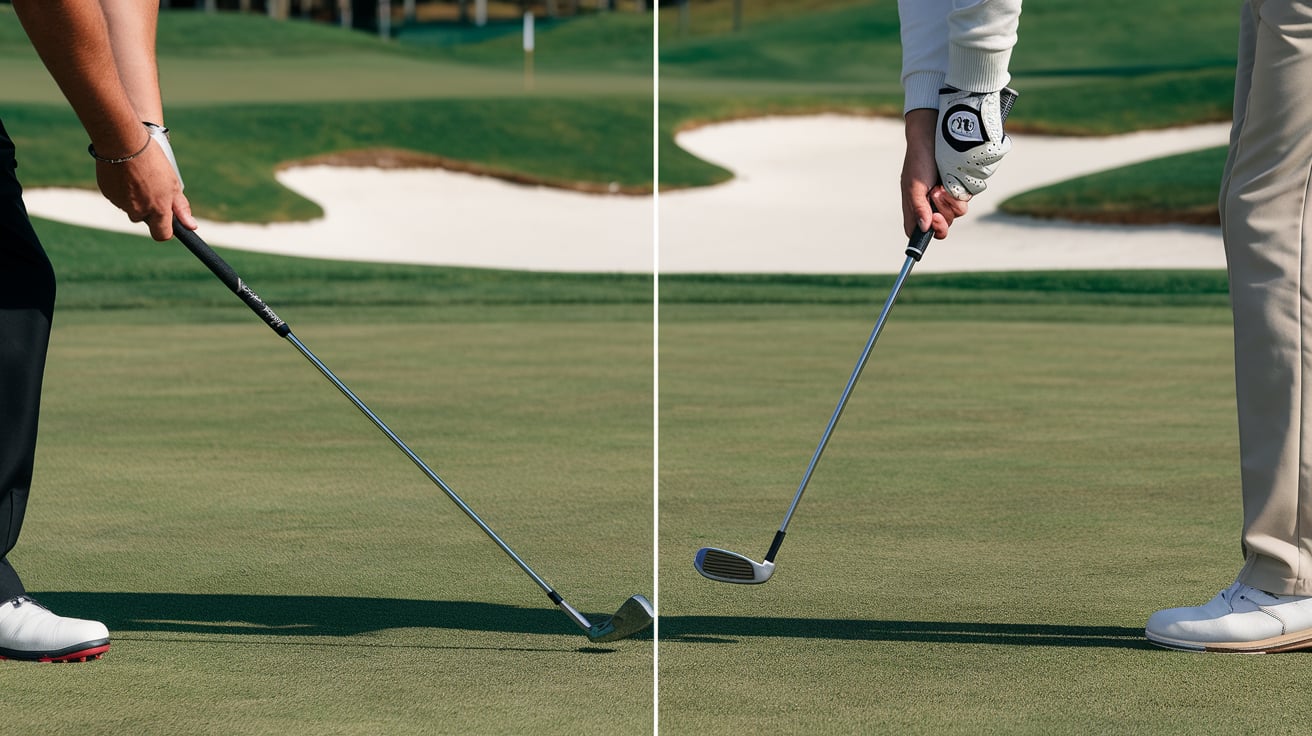
Grip. A grip that’s too weak rotated too far toward the target makes it harder to square the clubface through impact, which often shows up as a slice. A grip that’s too strong can produce the opposite miss, closing the face too early and causing a hook or a low, hard pull.
Alignment. Golfers frequently aim their body at the target instead of parallel to it, then unconsciously adjust their swing path mid-motion to compensate. That compensation is often mistaken for an inconsistent swing, when the real issue is what happened before the club ever moved.
Ball position. Playing the ball too far forward or back in your stance changes where the clubhead meets the ground relative to your swing arc, which affects both contact quality and launch angle. A ball played too far forward, for instance, can encourage hitting up on the shot too early or catching it thin.
Posture. Standing too upright or hunching too far forward changes your swing plane before you even start the takeaway, which forces your arms or hips to compensate later in the swing just to make contact.
Checking these four before working on tempo, power, or sequencing saves time, because a setup flaw will undo good swing mechanics almost every time.
Sequencing: The Real Source of Most Inconsistency
If setup checks out, sequencing is usually next. The golf swing works best when the body moves in a specific order: hips initiate the downswing, torso and shoulders follow, then arms and hands release last. When that order breaks commonly when the upper body or arms start the downswing instead of the hips timing gets thrown off, and the clubface arrives at impact in a different position almost every swing.
| Symptom | Likely Cause | Correction |
|---|---|---|
| Inconsistent slice, especially under pressure | Upper body starts the downswing before the hips | Practice starting the downswing with a small hip bump toward the target before the arms move |
| Fat shots, hitting behind the ball | Weight staying on the back foot through impact | Focus on shifting weight to the front foot during the downswing, not just at finish |
| Thin shots, low line drives | Standing up out of posture during the downswing | Maintain spine angle from address through impact rather than rising early |
| Shots that go both directions unpredictably | Inconsistent clubface control rather than a path issue | Isolate clubface with slow-motion swings before adding speed back in |
| Loss of distance despite feeling like a full swing | Poor sequencing reduces lag and speed at impact | Work on transition drills that delay the release of the wrists |
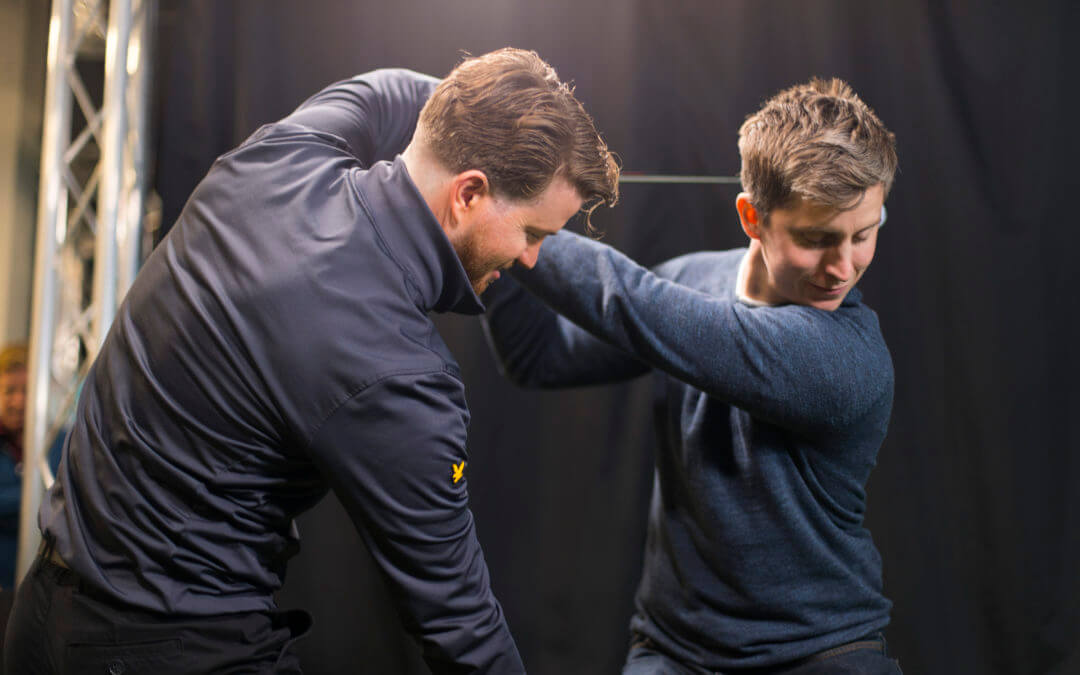
Sequencing problems are harder to feel than to see, which is part of why video even a phone propped against a golf bag tends to reveal more than trying to sense the fault from the inside.
Clubface Control: The Single Biggest Factor in Shot Direction
Ball flight is determined mostly by clubface angle at impact, with swing path playing a secondary role in how much the ball curves. This matters because many golfers spend practice time adjusting their swing path trying to swing more from the inside or the outside when clubface control was the actual issue the whole time.
A simple way to isolate this: hit slow, half-speed shots focusing only on where the clubface points at impact, without worrying about full speed or distance. If contact and direction improve at half speed, the clubface is likely the primary issue, and path adjustments can wait.
Fixing Contact Problems: Thin, Fat, and Topped Shots
Poor contact often gets treated as a mystery, but the patterns are fairly predictable once you separate them.
Fat shots (hitting the ground before the ball) usually come from weight staying back, an overly steep angle of attack, or a ball position too far back in the stance. The correction is rarely “swing down harder” it’s almost always about weight transfer and where the low point of the swing arc actually sits.
Thin or topped shots typically happen when the body rises during the downswing, effectively raising the swing’s low point above the ball. This is often an unconscious reaction to a fat shot on a previous swing, which creates a frustrating back-and-forth pattern between the two misses.
Inconsistent strike location on the clubface (toe or heel contact) usually points to distance from the ball at address, either standing too close or too far, rather than a timing issue.
Fixing contact almost always starts at address and weight transfer before it involves anything about swing speed or effort.
Quick Answers on Common Swing Questions
What is the most important part of a golf swing? Most instructors point to impact position where the clubface, path, and body are positioned the moment the club meets the ball since that’s what actually determines ball flight, regardless of how the rest of the swing looks.
Why is my golf swing inconsistent? Inconsistency usually traces back to one of three areas: setup fundamentals that shift from swing to swing, sequencing that starts from the wrong body part, or clubface control that varies more than swing path does.
How do I improve my clubface control? Slow-motion, half-speed swings that isolate clubface position at impact without worrying about distance tend to build awareness faster than trying to fix it at full speed.
How do I generate more power in my golf swing? Power typically comes from better sequencing and lag, not more effort. A well-timed swing at moderate effort usually produces more consistent speed than an all-out swing with poor transition.
Tempo and Timing: Why Trying Harder Often Makes It Worse
Tempo refers to the ratio between backswing and downswing speed, and it’s one of the more overlooked reasons for inconsistency. A rushed transition starting the downswing too quickly or aggressively often throws off sequencing even when setup and mechanics are otherwise sound.
A useful benchmark many instructors reference is a roughly 3-to-1 ratio between backswing and downswing time, though the exact number matters less than the idea: the downswing should feel unhurried relative to the backswing, even on full-speed shots. Counting a simple rhythm during practice swings a longer count going back, a shorter count coming down can help reset tempo without needing to think about mechanics at all.
Trying harder tends to shorten the backswing and rush the transition at the same time, which is part of why swinging at less than full effort often produces straighter, longer shots than swinging at maximum effort.
Generating Power Without Losing Control
Clubhead speed and control aren’t opposites, but golfers often treat them that way, sacrificing one for the other without realizing there’s a better path.
Lag, maintaining the angle between the club shaft and lead arm into the downswing, is a major contributor to speed, since it delays the release of the club until later in the swing, when it can transfer more effectively into the ball. Golfers who “cast” the club early, releasing that angle too soon, typically lose speed even if the swing feels powerful.
A practical way to build lag without overcomplicating the swing: exaggerate a pause at the top of the backswing during practice swings, then let the downswing start from the ground up hips first rather than throwing the arms and club at the ball. This tends to build speed as a byproduct of better sequencing rather than as a separate effort.
Balance and Weight Transfer as a Diagnostic Tool
Balance at the finish is one of the simplest, most honest indicators of what happened earlier in the swing. A golfer who finishes off-balance, falling backward or sideways, almost always has a weight transfer or sequencing issue upstream the finish position doesn’t cause the problem, it reveals it.
A quick self-check: after a full-speed swing, can you hold your finish position for two or three seconds without adjusting your feet? If not, something earlier in the swing often weight staying on the back foot too long is working against balance rather than with it.
This diagnostic is worth using regularly, since it doesn’t require video or a lesson to apply, and it tends to catch sequencing problems before they show up as a specific bad shot pattern.
Building a Swing You Can Trust Under Pressure
Everything above is easier to apply on a driving range than in the middle of a round, which is exactly why repeatability matters more than any single technical fix. A few habits help technical improvements survive the transition from range to course:
- Practice with a specific target and a pre-shot routine, not just repeated swings at nothing in particular, since course shots require both mechanics and decision-making.
- Work on one change at a time rather than several swing thoughts at once trying to fix grip, tempo, and sequencing simultaneously usually produces worse results than isolating one variable.
- Use slower, controlled swings during practice to reinforce a change before testing it at full speed, since full-speed practice tends to default back to old patterns under effort.
A swing change that only works on the range hasn’t fully taken yet. The real test is whether it holds up on the sixth hole after a bad start, which is a different kind of pressure than a bucket of range balls.
When a Lesson Is Worth More Than Another Swing Tip
Some issues particularly grip, alignment, and clubface control are genuinely difficult to self-diagnose, since they often feel correct from the inside even when they aren’t. If a specific miss keeps returning despite working through the setup and sequencing checks above, a single lesson focused on video or launch monitor feedback is often more efficient than continuing to experiment alone. Instructors can also confirm whether a fault is mechanical or simply a timing issue that needs more repetition rather than a technical change.
The most useful next step from here isn’t necessarily “practice more” it’s practicing the right thing, which usually starts with correctly identifying which of the causes above actually applies to your miss.Golf Tips for Beginners: A Complete Roadmap From First Swing to First RoundGolf Tips for Beginners: A Complete Roadmap From First Swing to First Round

Similar Posts