Golf Tips for Beginners: A Complete Roadmap From First Swing to First Round
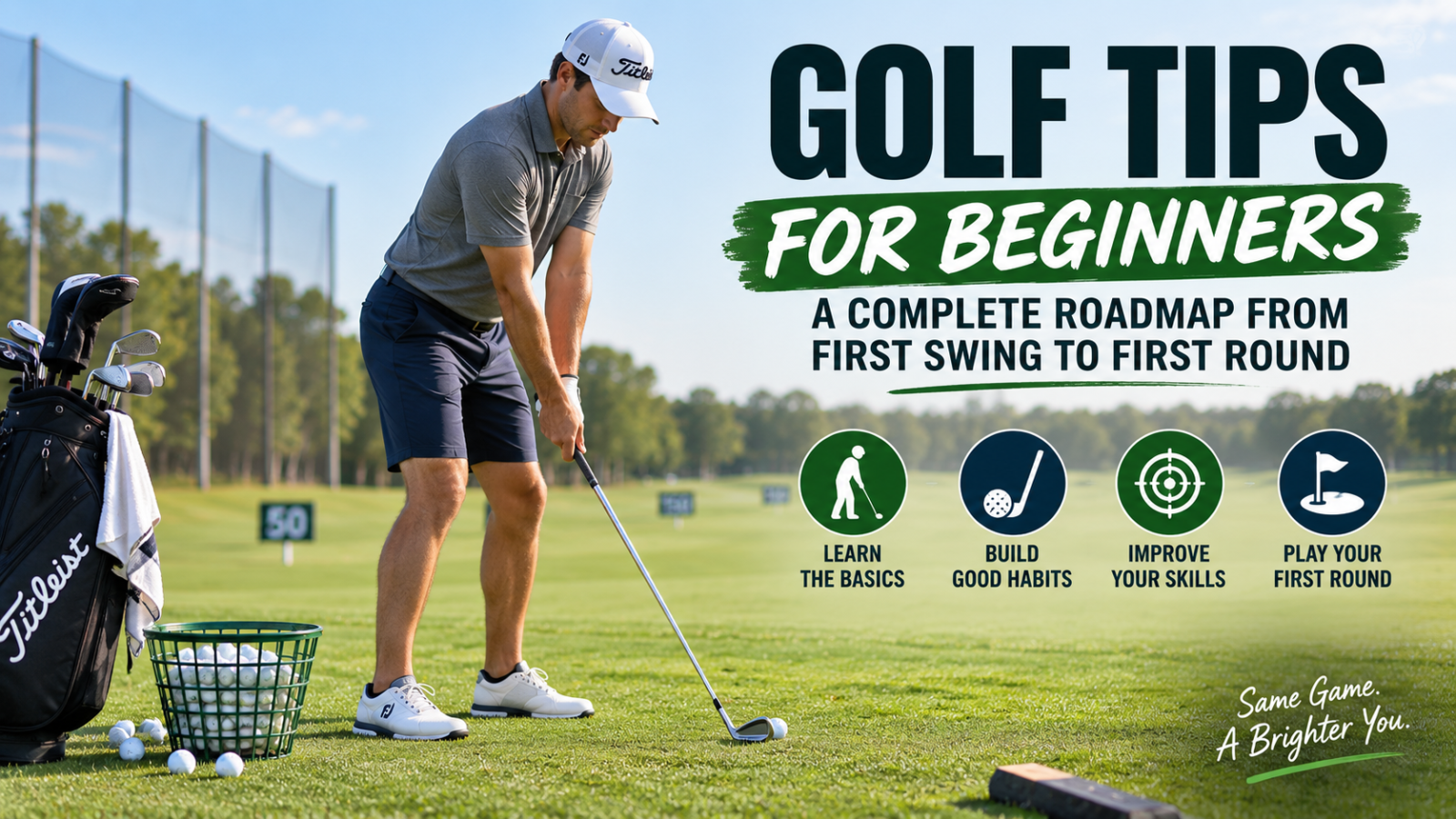
Most beginner golf advice arrives in random pieces, a tip about grip here, a swing thought there, a club recommendation from a friend who plays twice a year. None of it is wrong, exactly. It’s just not in an order that helps you actually improve. This guide puts the fundamentals in the sequence a new golfer needs them: setup first, then a swing you can repeat, then practice habits, short game, equipment, and finally what to expect once you’re standing on a real first tee.
You don’t need to master everything below before you play. You need to know what matters most right now, and what can wait.
What a Beginner Should Learn First: Grip, Stance, and Alignment
Before anything about swing mechanics, three setup fundamentals decide whether your shots have a chance of going where you want: grip, stance, and alignment. Skip these, and no amount of swing advice will fix the miss pattern that follows.
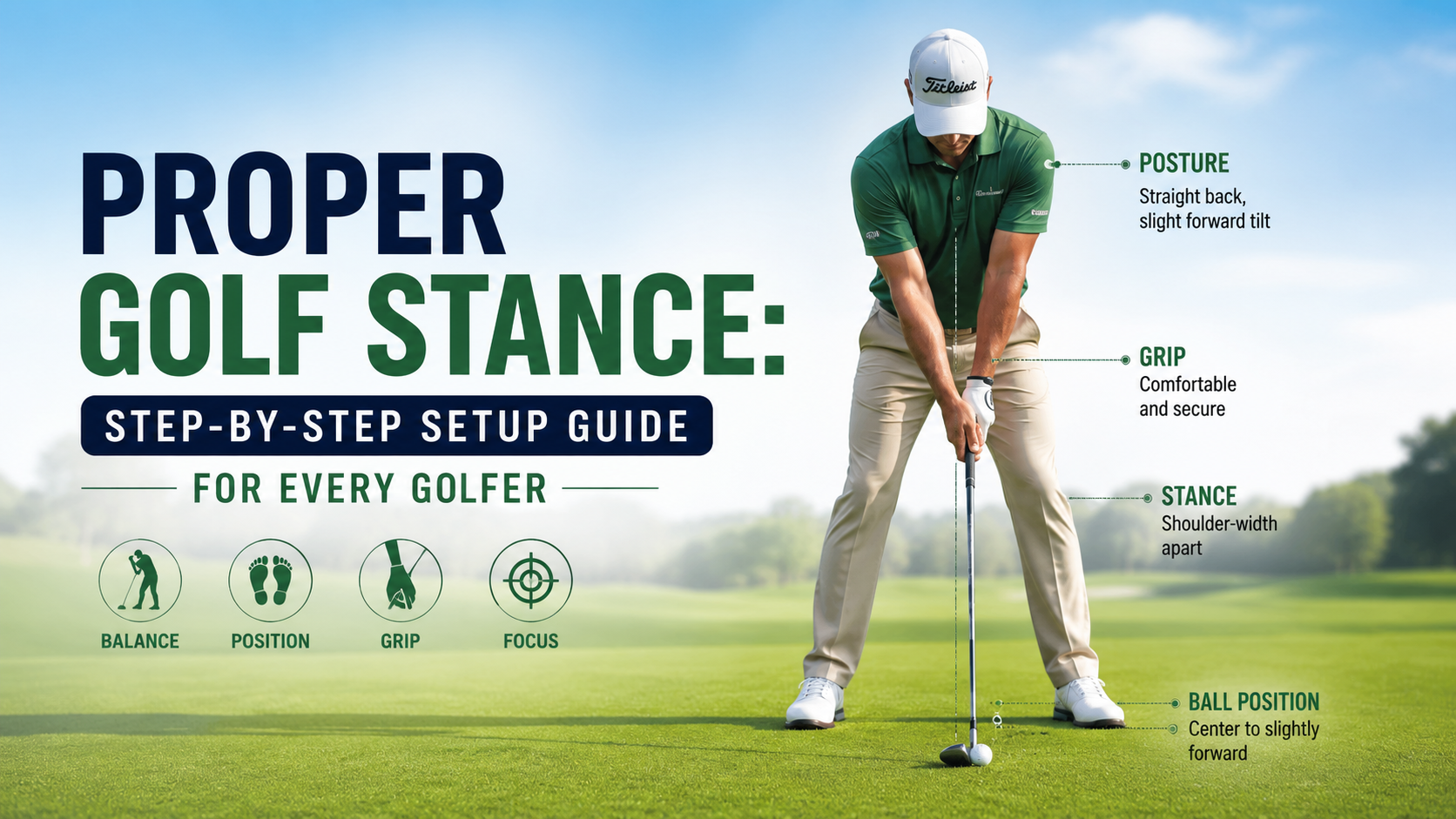
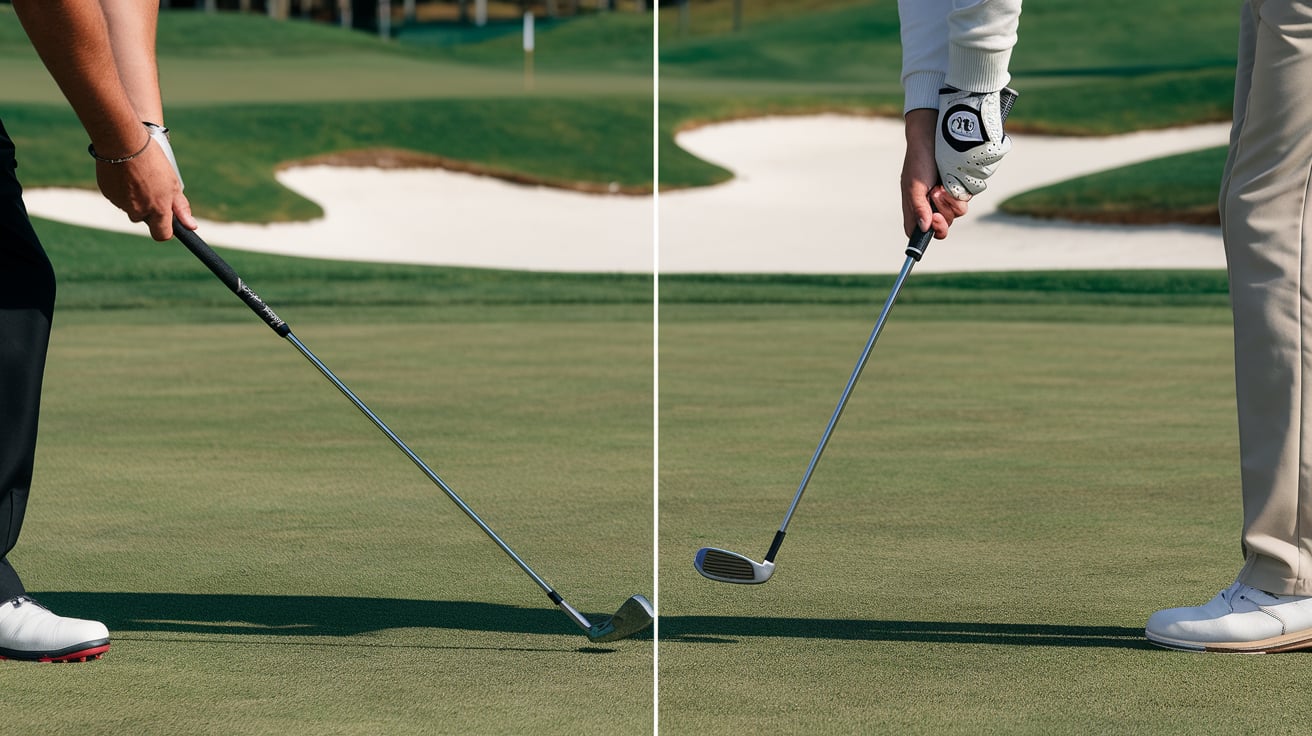
Grip. Hold the club more in your fingers than your palm, with your hands working as a single unit rather than fighting each other. A grip that’s too weak (hands rotated too far left for a right-handed golfer) tends to produce a slice. Too strong, and shots can hook. A neutral grip is the easiest starting point, and it’s worth checking against a mirror or a lesson before it becomes a habit that’s hard to unlearn.
Stance. Feet roughly shoulder-width apart, knees softly flexed, weight balanced between the balls of your feet, not back on your heels. This is often called an athletic stance because it resembles the ready position in almost any sport that involves reacting quickly.
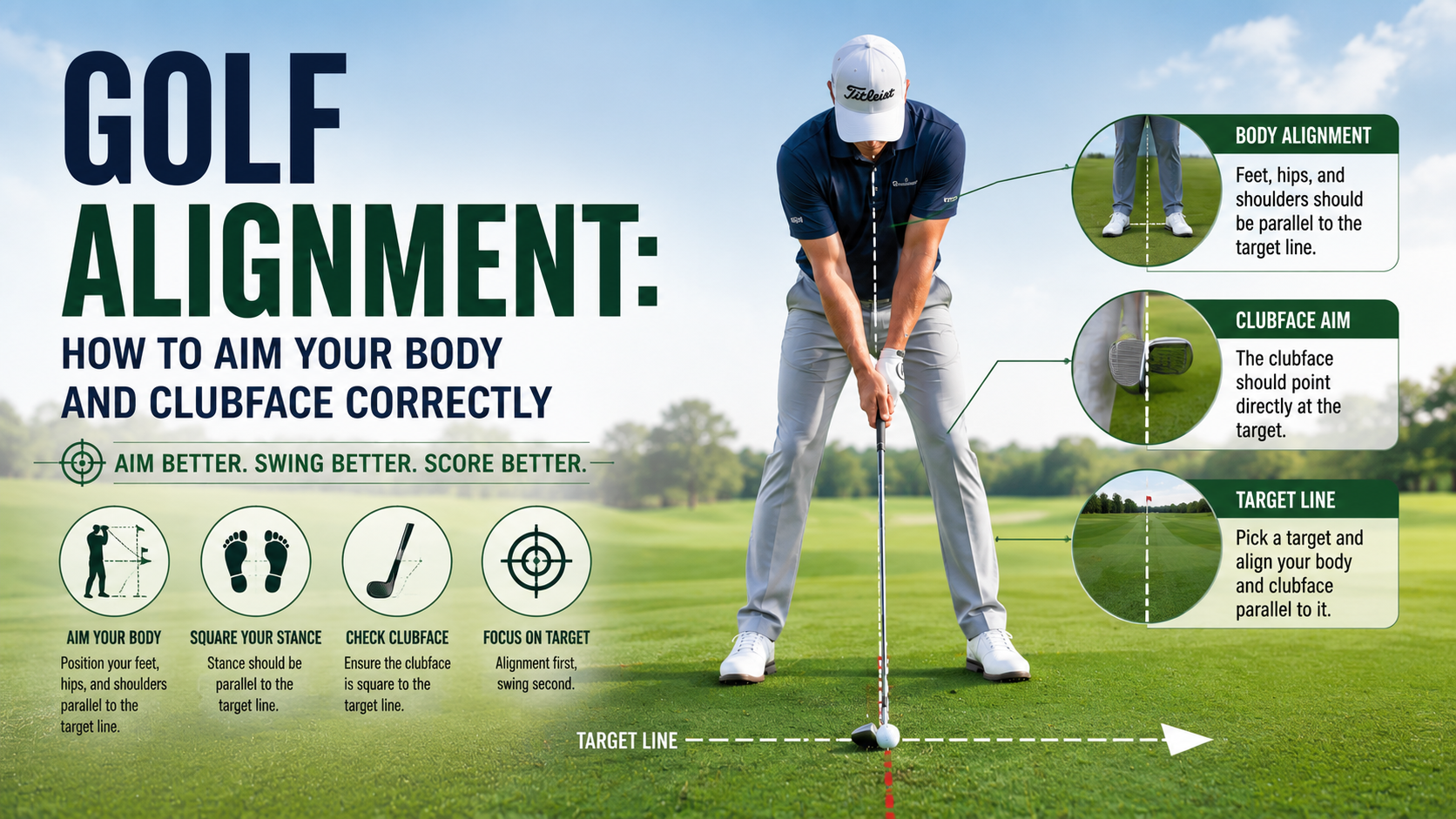
Alignment. This is the fundamental new golfers skip most often, and it’s probably the single biggest reason beginners miss shots to one side consistently. Your feet, hips, and shoulders should aim parallel to your target line, not directly at the target itself. Laying a club on the ground along your foot line during practice is a simple way to check this without needing another person to watch.
Get these three right consistently, and your ball-striking problems become much easier to diagnose, because you’ve ruled out the most common hidden causes.
Building a Golf Swing You Can Actually Repeat
A repeatable swing matters more than a powerful one, especially in your first year. Distance without direction just means bigger misses.
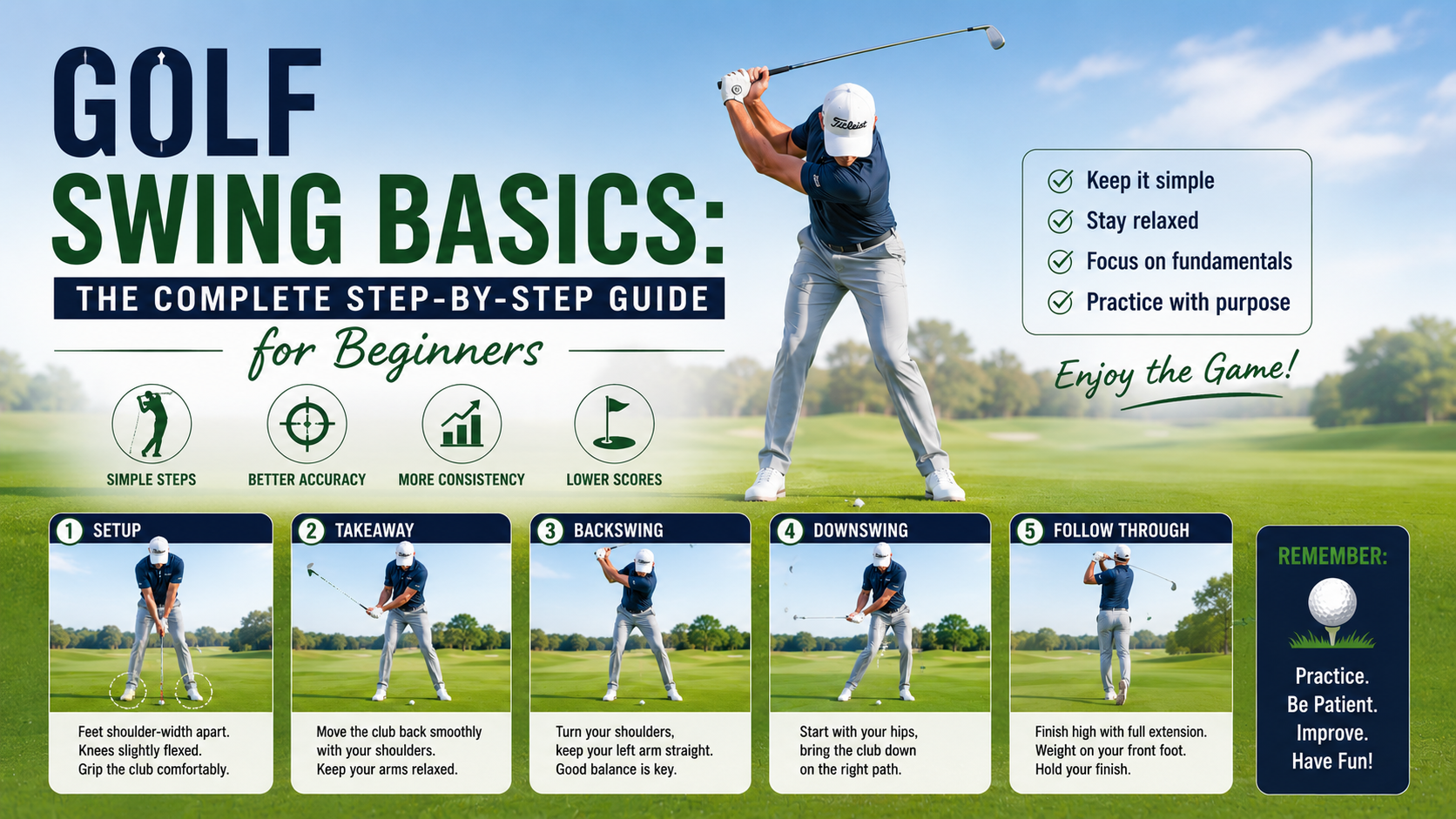
Think of the swing in three phases:
- Takeaway. Move the club back low and slow, keeping the clubface square to your swing path rather than opening or closing it early. Rushing this phase is one of the most common early mistakes.
- Transition. The change of direction from backswing to downswing. Beginners often start the downswing with their arms and shoulders instead of letting the lower body lead, which throws off sequencing and reduces both consistency and power.
- Impact and follow-through. Your goal at impact isn’t to “hit” the ball so much as to swing through it, with your weight shifting toward the target and your body rotating fully into a balanced finish. A swing that ends off-balance is a reliable sign something broke down earlier in the motion.
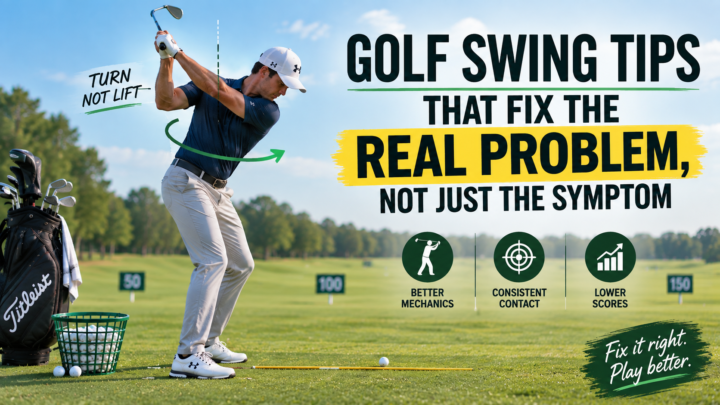
You don’t need to memorize swing theory to make progress here. A simpler approach: pick one checkpoint (grip, stance, alignment, or takeaway) to focus on per range session, rather than trying to fix everything in a single visit. Trying to think about five swing thoughts at once is a common way beginners stall out.
Three Mistakes That Slow Down Almost Every New Golfer
Some mistakes show up so often among beginners that recognizing them early can save months of frustration.
Lifting the head or “looking up early.” This usually isn’t really about the head, it’s a symptom of trying to see the result of the shot before the swing is finished, which pulls the whole upper body out of position. The fix is trusting the swing enough to let it finish before checking the outcome.
Gripping the club too tightly. Tension in the hands and forearms restricts wrist hinge and reduces clubhead speed, which ironically makes shots feel harder to control, not easier. A useful gut check: if your knuckles are white, you’re holding on too hard.
Trying to swing as hard as possible. New golfers often associate effort with distance. In practice, an efficient, well-timed swing at 80% effort usually outperforms an all-out swing that sacrifices sequencing and balance for that last bit of speed.
None of these are permanent flaws, they’re just common starting points. Recognizing which one applies to you is often more useful than any single swing tip.
A Practice Plan That Fits a Real Beginner’s Schedule
How often should a beginner practice golf? More important than raw hours is how those hours are split. A common and avoidable mistake is spending an entire practice session hitting driver on the range, then wondering why scores don’t improve.
A more balanced approach for someone practicing once or twice a week:
- Spend close to half your practice time on putting and short chips inside 30 yards.
- Use a smaller portion on full swings with mid-irons, since these are the most common clubs used during an actual round.
- Reserve driver practice for last, and treat it as a smaller slice of the session, not the main event.
This split can feel backward at first, since driving feels like the most exciting part of golf. But shots inside 100 yards and on the green typically account for a large share of total strokes in a beginner’s round, which is exactly why short-game practice tends to lower scores faster than chasing extra yards off the tee.
Short, focused sessions, even 20 to 30 minutes with a specific goal, tend to build more consistent skill than occasional long sessions without a plan.
Why the Short Game Deserves Attention Before the Long Game
Putting, chipping, pitching, and bunker play don’t get the same attention as the full swing, largely because they’re less visually dramatic. They’re also where beginners typically have the fastest room to improve.
Putting rewards a simple, repeatable stroke more than raw talent. Start by focusing on distance control on longer putts before worrying about reading break, a three-putt from misjudged distance is a more common scoring problem for beginners than a missed read.
Chipping is about matching your landing spot to the shot, then letting the ball roll the rest of the way, rather than trying to fly the ball all the way to the hole. A simple rule many instructors use: land the chip on the green as early as possible and let it roll like a putt.
Pitching covers the gap between a chip and a full swing, typically higher, shorter shots that still need to carry some distance in the air. This is often the shot beginners are least comfortable with, since it doesn’t feel like either a chip or a full swing.
Bunker play intimidates new golfers more than almost any other shot, but the technique is different from what instinct suggests: you’re generally hitting the sand behind the ball, not the ball itself, letting the sand’s momentum lift the ball out.
Spending even one practice session per month purely on short game, with no full swings at all, often produces a bigger scoring improvement than an equivalent session spent on the driving range.
Choosing Golf Clubs Without Overspending Early
New golfers often assume they need a full, matched set of premium clubs before they can start improving. In reality, a smaller set of forgiving, game-improvement clubs is usually the more practical starting point, since technique is still developing and expensive equipment won’t compensate for inconsistent contact yet.
| Club Type | Typical Use for Beginners | Selection Tip |
|---|---|---|
| Driver | Tee shots on longer holes | Look for a larger clubhead and more forgiving design rather than a smaller “players” head |
| Fairway wood / Hybrid | Longer approach shots and tee shots on shorter holes | Hybrids are generally easier for beginners to hit consistently than long irons |
| Mid-irons (6–8) | Standard approach shots | Game-improvement irons with a wider sole tend to forgive mishits better |
| Wedges | Short approach shots, chipping, bunker play | One pitching wedge and one higher-lofted wedge is usually enough starting out |
| Putter | Every hole | Comfort and alignment aid matter more here than brand |
A secondhand or beginner-tier set is a reasonable way to start, since swing tendencies, and even preferred grip size or shaft flex, often shift meaningfully during the first year of consistent play. Many golfers find it more useful to invest in a proper club fitting once their swing has stabilized, rather than before.
What to Expect the First Time You Play a Full Course
Reading about golf and playing an actual round are different experiences, and a few practical basics make that first round far less stressful.
Pace of play. Golf moves in groups, and slow play affects everyone behind you. If you’re struggling with a hole, it’s normal and expected to pick up your ball after a reasonable number of strokes rather than holding up the group behind you.
Basic etiquette. Stay quiet and still when someone else is about to hit. Avoid walking through another player’s putting line on the green. Replace divots, repair ball marks on the green, and rake bunkers after you’ve played out of them.
Scoring pressure. Nobody expects a beginner to shoot a low score on a first round. Many new golfers find it easier, and more enjoyable, to play from forward tees and simply track a few specific goals, like fairways hit or three-putts avoided, instead of fixating on total score.
Course knowledge. You’re not expected to know a course before you play it. Reading the scorecard, watching for posted hazards, and asking a starter or pro shop staff about hole layout are all completely normal for a first-time visit to any course.
Lessons, Apps, or Learning on Your Own?
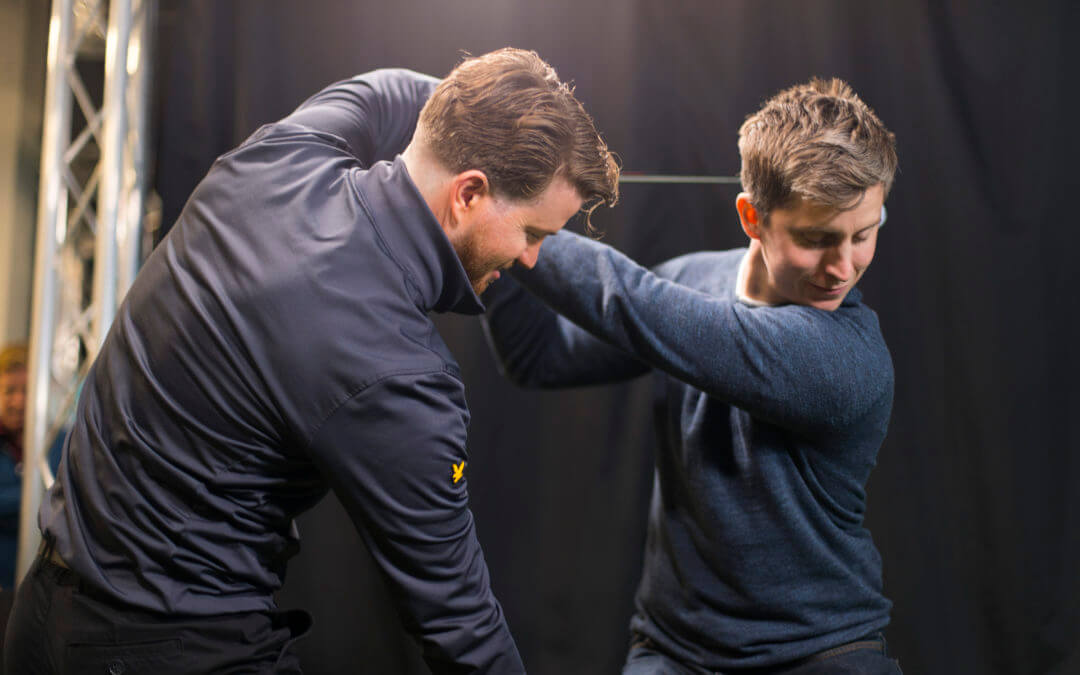
Can beginners learn golf without lessons? Yes, to a point, plenty of golfers develop functional games through practice, video, and trial and error. But a few lessons early on tend to prevent problems that are much harder to fix once they’ve become habits, particularly around grip and alignment, which are difficult to self-diagnose since they often feel correct even when they aren’t.
A practical middle ground many new golfers use:
- One or two lessons early on to check grip, stance, alignment, and basic swing sequencing.
- Instructional videos or apps between lessons to reinforce what a coach already confirmed.
- A follow-up lesson every few months to catch habits that may have crept back in.
Self-teaching everything is possible. It’s just usually slower, and more prone to reinforcing exactly the mistakes described earlier in this guide.
How Long It Actually Takes to Get Better at Golf
There’s no fixed timeline, since progress depends heavily on how often you play and practice, and whether that practice is structured or just casual range time. That said, a few general patterns hold true for most beginners:
- Basic contact and short shots often start feeling more consistent within the first few months of regular practice.
- Course management and shot selection, knowing which shot to play, not just how to make a swing, usually take longer to develop than physical technique, often a full season or more of playing actual rounds.
- Scoring improvement tends to come in stages rather than a steady line, with plateaus that are a normal part of the process rather than a sign something’s wrong.
Golf rewards patience more than most sports. A golfer who practices with a plan, prioritizes the short game, and plays regularly will typically see more consistent progress than one who focuses only on driver distance at the range.
Common Questions New Golfers Ask
What should a beginner learn first in golf? Grip, stance, and alignment, in that order. These three fundamentals affect every other part of the game, and problems here are often mistaken for swing flaws.
What golf clubs should a beginner use? A smaller set of forgiving, game-improvement clubs, larger clubheads, wider soles, and hybrids in place of hard-to-hit long irons, is generally more practical than a premium, players-oriented set.
How often should a beginner practice golf? Consistency matters more than volume. Short, focused sessions once or twice a week, split between short game and full swing, tend to produce steadier progress than occasional long sessions.
How can a beginner hit the golf ball more consistently? Consistent contact usually comes from fixing setup fundamentals first, grip, stance, alignment, and ball position, before adjusting swing mechanics further.
Can beginners learn golf without lessons? Yes, but a small number of early lessons often catch setup issues that are difficult to notice on your own, which can prevent months of practicing an ingrained flaw.
How long does it take to get good at golf? It varies widely, but most beginners notice steadier contact within a few months of regular practice, while course management and consistent scoring typically take a full season or more to develop.
What are the most common mistakes beginners make? Lifting the head early, gripping the club too tightly, and swinging for maximum power before contact is consistent are three of the most common patterns among new golfers.
Your Next Step
If you take one thing from this guide, make it this: fix setup before swing, and prioritize short game before driver distance. Those two shifts alone address most of what slows beginners down. From here, the most useful next step is usually a single lesson to confirm your grip, stance, and alignment are sound, a small investment that tends to save far more practice time than it costs.

Similar Posts